Canada’s oldest weekly newspaper
© 2026 The Picton Gazette
Since 1830


 0° Mainly Clear
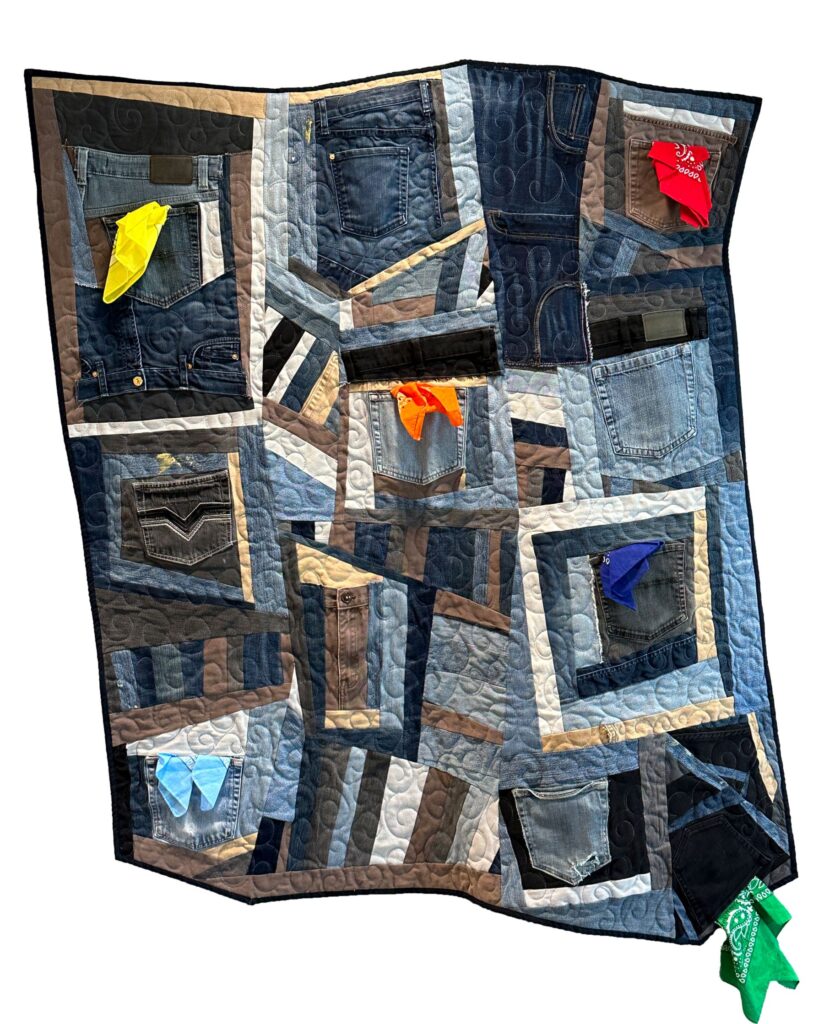
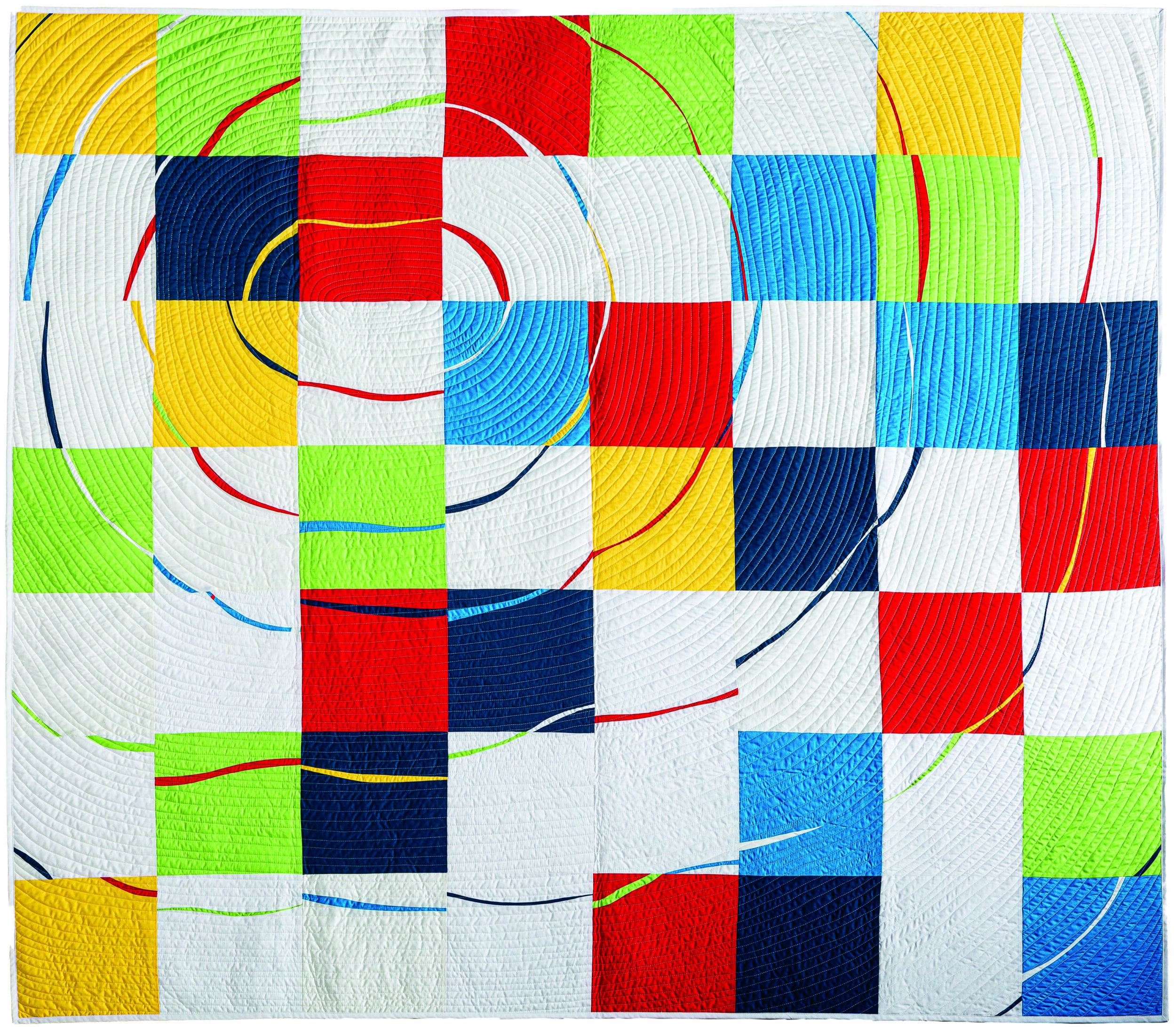 Bill Stearman, Be the Pebble! Make the Waves, 72”x 60”, 2023.
(Quilted by Deanna Gaudaur. Photo by Mike Gaudaur)
Bill Stearman, Be the Pebble! Make the Waves, 72”x 60”, 2023.
(Quilted by Deanna Gaudaur. Photo by Mike Gaudaur)
Prince Edward County has a longstanding quilt making tradition. Year after year the exhibition hall at the Picton Fair displays works at once domestically functional and worthy of show. The quilts combine the intimacy of home and the wider world.
What better medium to take up the history of Queer rights in Canada, a series of public interventions into private lives?
County resident Bill Stearman, who calls himself a Quiltivist, admits that he is novel in the quilting community for his political understanding of the art. “I am not the norm, but I’m also not alone,” he says. Many artists use quilting to explore political meaning.

Mr. Stearman came to the County as a teacher, developed into a sheep farmer, and after leaving for some years, reinvented himself as an artist, returning in 2020.
“I did a course at County Arts a couple years ago, and people came in with all kinds of different things and made quilts. You bring in someone you love. You bring their shirts in and all those things, and you make a quilt, and you wrap yourself in it.” Called a “memory quilt,” it offers an immersive experience.
Many of Mr. Stearman’s quilts contain verbal messages. One incorporates the full text of the Prime Minister’s 2017 apology for what was known as the “LGBT Purge,” the official policy, in place from the 1950s through the 1990s, of removing Queer members of the armed and police forces and government services.
Others work through colour and design, their messages conveyed in titles like, “Even if Your Voice Shakes,” or “1971, Before We Could Ask” (pictured right). The latter is a stunning integration of recognizable elements: a collection of denim back pockets with colourful handkerchiefs hanging out—an important code in a time when expressing desire could be deadly. That it breaks the expectations of a “quilt” heightens the tragedy it records.
Many quilts are more personal, a “Letter to My Thirteen Year Old Self,” or “I Came Out at Age 47: a coming out story in braille,” which contains the colours of the rainbow in fragmented, but geometrical triangles emerging from a pattern of dark blue squares, over which is delicately stitched in cursive, “It wasn’t out of the blue! / I always knew! / I was just so afraid!”
The artist has just finished a remarkable year travelling from coast to coast over 18 weeks, stopping in each province and most territories of Canada, from Windsor, to Winnipeg, to Whitehorse.
The object was to document the progress of Queer rights by collecting the stories of people he calls “Queer Elders”—those who have lived through the legal history of Queer life in Canada. That history is marked by eleven Supreme Court decisions and Acts of Parliament, beginning with the 1969 decriminalization of same-sex sexual activity and continuing all the way to the 2021 banning of “conversion therapy.”
Mr. Stearman recorded the stories of sixty or seventy people from all walks of life. Hundreds of hours of interviews assemble the materials to represent Queer experience over the last sixty or more years.
“The information from the interviews will be sorted into twelve quilts. Eleven of these will be based on legal moments that advanced Queer Rights in Canada. The twelfth quilt will feature the 1980s when there were no advances in our rights, but when we came together to look after each other. This is the decade where many of the organizations today that work for our rights and to provide us with services began.”
Each flag-like quilt will stand for a legal point in time. Upon these banners will be affixed the stories he has heard, or the fragments of stories affected by the historical moment. Beyond the immediate presentation, QR codes will direct viewers to a curated collection of further testimony and contemporary contexts.
The final project is a show of twelve quilts and two projections, containing interviews and other media. It will launch at the County Arts Lab in July before touring.
“The very first one is a is a whole history lesson. I mean, it’s a whole unit of history. The two sides of it are going to be the pros and the cons of the 1969 decision: it is an advance, but it defines limitations,” says Mr. Stearman. Each quilt is a time capsule, intended for public places, available for viewers of the future. “So, when you walk by, you get to read those snippets of history, maybe in the Picton post office, or it can be in the grocery store!”
The range of voices he has captured is as broad as the country itself, and as varied as the patterns of a quilt.
See it in the newspaper