Canada’s oldest weekly newspaper
© 2026 The Picton Gazette
Since 1830


 9° Partly Cloudy
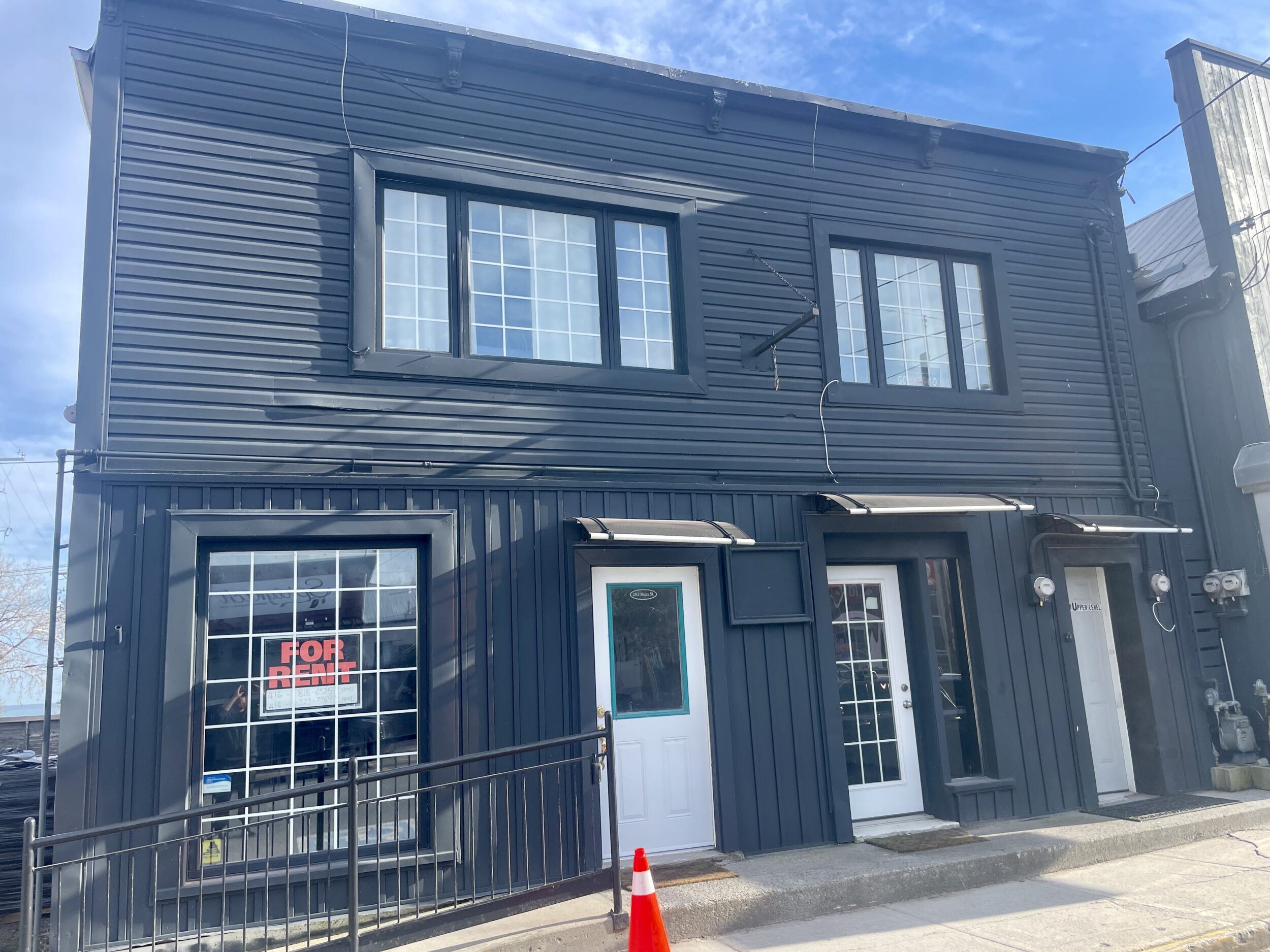 Storefront space at the corner of Wellington’s Main and Wharf Streets is available to rent. (Jason Parks/Gazette staff)
“Some of these storefronts have been vacant, not just for a month or two, but for years,” said Councillor Braney, who brought the resolution, seconded by Councillor Corey Engelsdorfer, to Council May 12.
“The issue for the business community in some of the hamlets and towns that we have is vacant storefronts and what that does to the business area,” he continued.
The councillors consulted local business owners and landlords to craft the resolution.
“All of them were very favourable,” Mr. Braney noted. “Everybody wants to put their best foot forward, not just in our main areas but in our towns and hamlets.”
He noted Consecon may be on the verge of a renaissance.
“It’s really coming along. It seems to be the next ‘it’ town in Prince Edward County.”
Mr. Braney and two Wellington business owners took a pilgrimage to the celebrated town of Warkwarth, in Hastings County, where an active business improvement association has delivered an energetic town centre, with few boarded-up windows.
“If a storefront goes vacant, it’s only a matter of a month before someone else goes in there,” Mr. Braney said. “People are allowed to think outside the box and do things.”
Councillor Kate MacNaughton supported the resolution, and said she hopes the County will also explore a vacant home tax.
“Land speculation is creating ‘dead zones’ in communities, and I think that applies to commercial areas as well,” she said.
“No one wants to go into a small town and see boarded-up buildings,” Councillor Sam Grosso agreed.
Councillor Sam Branderhorst suggested the tax could be funnelled to a reserve to support small businesses, perhaps by setting up BIAs in smaller commercial areas, like that of Consecon.
Vacant Storefront Tax Province-Wide
Many municipalities are introducing a vacant homes tax to increase housing and reduce speculation, but a storefront tax has proven harder to implement.
Councillor Chris Braney
“We don’t have all the answers. We’re working on this as a collab with the business community, with staff, with all of us around the table.
I think it’s a good way forward.”
Toronto’s city council moved to explore such a tax in 2020. Another resolution in 2025 was to explore higher standards of empty storefront maintenance.
In 2024, councillors in Windsor and Ottawa joined forces to advocate for a Vacant Storefront Tax across Ontario.
But these efforts haven’t led to one anywhere in the province yet. A feasibility study undertaken by Midland’s municipal council found the tax would contravene the Municipal Act.
Property tax policy falls under municipal jurisdiction — but must align with provincial legislation.
When the Municipal Act was introduced, a Provincial Land Tax rebate meant landlords would be partially remunerated for any months the property was vacant.
In 2015, the rebate program was reviewed. Many Ontario municipalities, including Prince Edward County, eliminated it.
Part of the County’s latest resolution advocates for a vacant commercial storefront tax province-wide.
It will be forwarded to Premier Doug Ford, Minister of Municipal Affairs and Housing Rob Flack, and all 444 municipalities in Ontario.
“We don’t have all the answers. We’re working on this as a collab with the business community, with staff, with us around the table,” Mr. Braney said. “I think it’s a good way forward.”
See it in the newspaper