Canada’s oldest weekly newspaper
© 2026 The Picton Gazette
Since 1830


 4° Clear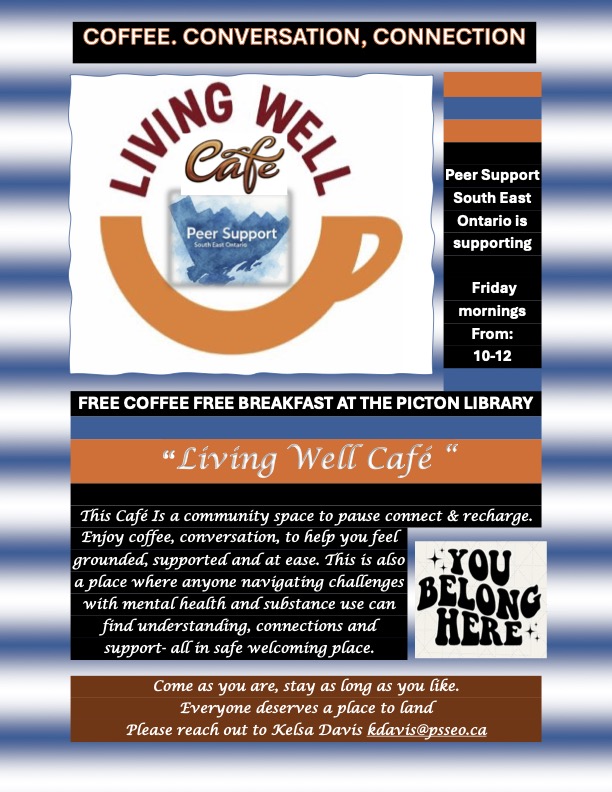
A new drop-in centre in the Picton Library marks the first return of peer support for addiction and mental health in Picton since the closure of 3 Doors Down in the early days of the pandemic.
Offering a welcoming space for clients 16 years and older, the Peer Support South East Ontario program is all about meeting people where they are at, with guidance from those who have gone through similar experiences.
“Our staff are credentialed through their own lived experience. They are people who have lived beyond the experience of addictions and mental health and are now supporting people to walk alongside them on their journey to their wellness,” said Lisa Rashotte, Peer Support Centre Coordinator and Education Coordinator.
“We’re non-clinical,” she added. “We work with people and not for people.”
Peer support is not prescriptive, but provides an open forum to discuss the strategies and tools that helped staff members on their own journey. There is an educational component too. If clients want to go deeper on a subject, they bring in outside expertise, such as public health workers.
Visitors can count on being greeted without stigma — and on lunch.
“Everyone who comes in is their own person so we are inclusive, we don’t judge or discriminate,” Ms. Rashotte noted.
On Friday mornings from 10am-12pm, the drop-in becomes a “living well cafe,” which Ms. Rashotte describes as “a community place for people to go, get grounded, and have coffee and breakfast and have good conversations with a peer support worker.”
The drop-in centre is a step towards re-establishing a permanent Peer Support centre in Picton. Centres are already operating in Belleville, Trenton, Kingston, Madoc, Napanee, and Brockville.
As Ms. Rashotte noted, the drop-in means Peer Support South East can reach the Picton population and get the word out about the services available.
In addition to the drop-in, Peer Support also offers Community Peer Support, where staff members meet clients in the community for a range of activities, from going for a walk to going to an appointment.
Another service stream is the Transitional Discharge Model, which supports clients moving out of the hospital and back into everyday life.
They also offer virtual peer support, which can be particularly helpful for rural clients or for anyone dealing with transportation barriers.
As Ms. Rashotte notes, every service offers the opportunity to meet with someone who can say, “I’ve been there too, I understand.”
“It makes a big difference for people,” she said. “It’s just an easy conversation with somebody who’s been there.”
Peer Support Picton is open Tuesdays and Fridays from 11am to 4pm in the Picton Library flex space. The Living Well Cafe runs Friday mornings from 10am-12pm.
See it in the newspaper