Canada’s oldest weekly newspaper
© 2026 The Picton Gazette
Since 1830


 10° Cloudy
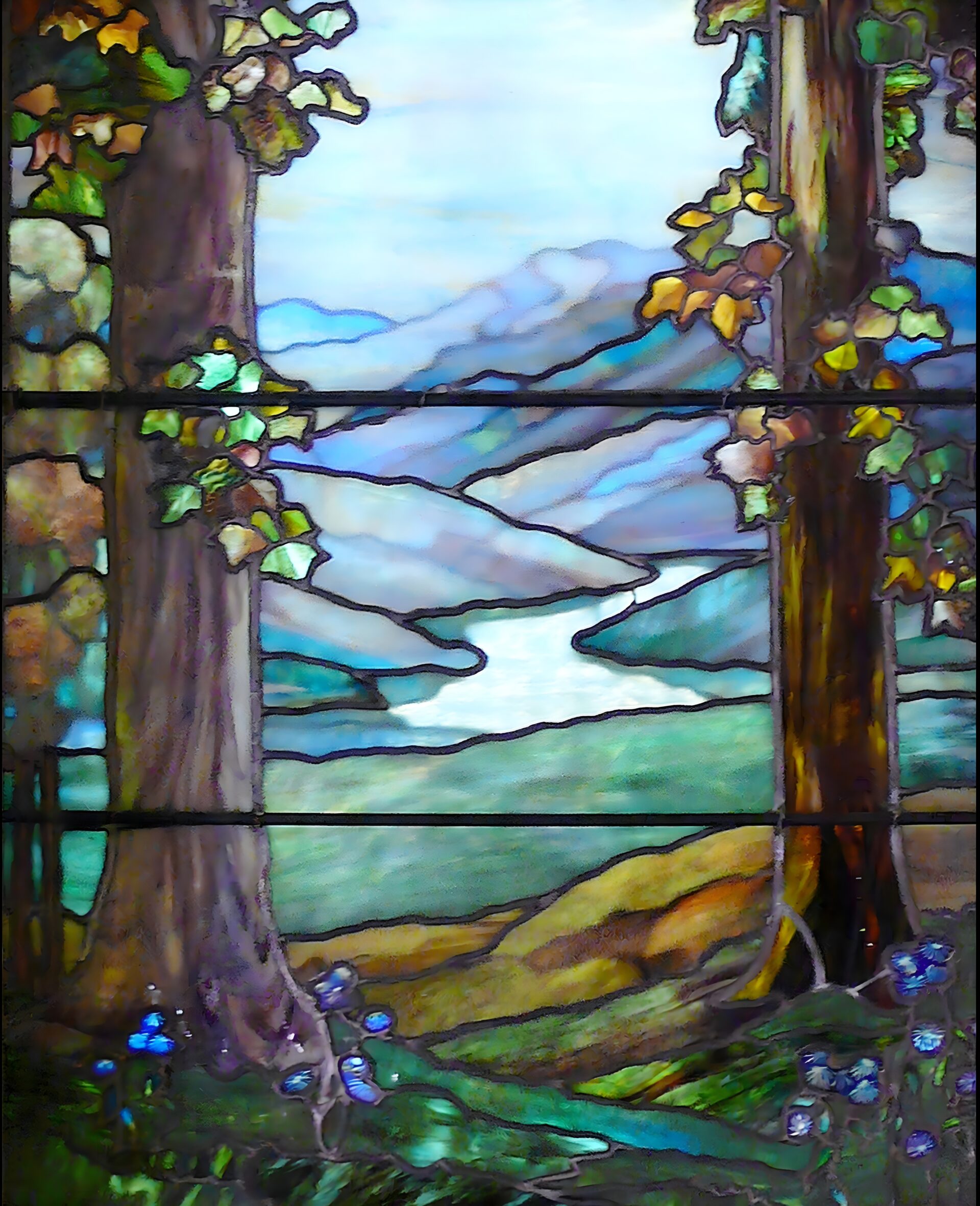
Among the stained glass windows in the Glenwood Cemetery’s marvellous Stone Chapel, one stands out. While five of the windows are filled with images and symbols from the secret societies that donated them when the Chapel was built in 1901, the window to the left of the main doorway depicts a river in a dreamlike landscape. Where did this window come from? And how does it connect with the others? The answer has mostly to do with love and family, but there’s also a link back to those secret societies.
The Chapman Memorial Window was donated in 1917 by Clarence Cheney Chapman, who was born in the County but living at the time in New York. He commissioned the window as a tribute to his father, Charles Augustus Chapman, and his grandfather, Dr. Reuben Jerald Chapman, a well known chemist. As well as being a freemason, he was one of the founders of Glenwood Cemetery.
During the building of Picton’s first Masonic lodge, members met in rooms provided by Chapman over his pharmacy —later Teasel’s Drug Store — on Main Street.
The Chapman window was made in New York City in the popular “Tiffany style” at Lamb Studio. It depicts a river valley, seen through an archway of golden maple trees in autumn. The Art Nouveau composition gives a quiet feeling of invitation and shelter, with an infinite horizon beyond.
The window was designed by Fredrick Lamb, son of one of the founders of the Studio. Trained as a painter in Paris, Frederick was strongly influenced by the stained glass work of Louis Comfort Tiffany, known for his landscapes and for his use of translucent opalescent glass in leaded windows. Clarence Cheney Chapman lived at 555 Park Ave in New York City, not far from the Lamb Studios on Sixth Avenue, so it’s not surprising that he chose them to create this window.
The Chapel windows are currently stored in a shipping container awaiting the unknown fate of the Chapel. To learn more about the windows, see Glenwood Chapel: Secret Societies and Their Stained Glass, by Sarah Hall, and available at Books & Company.
With thanks to the County Archives and Picton Gazette articles of: 1 Oct. 1901; 18 Oct. 1901; 22 Nov. 1901; 11 Oct. 1917; 3 March 1927.
See it in the newspaper