Canada’s oldest weekly newspaper
© 2026 The Picton Gazette
Since 1830


 24° Mostly Cloudy
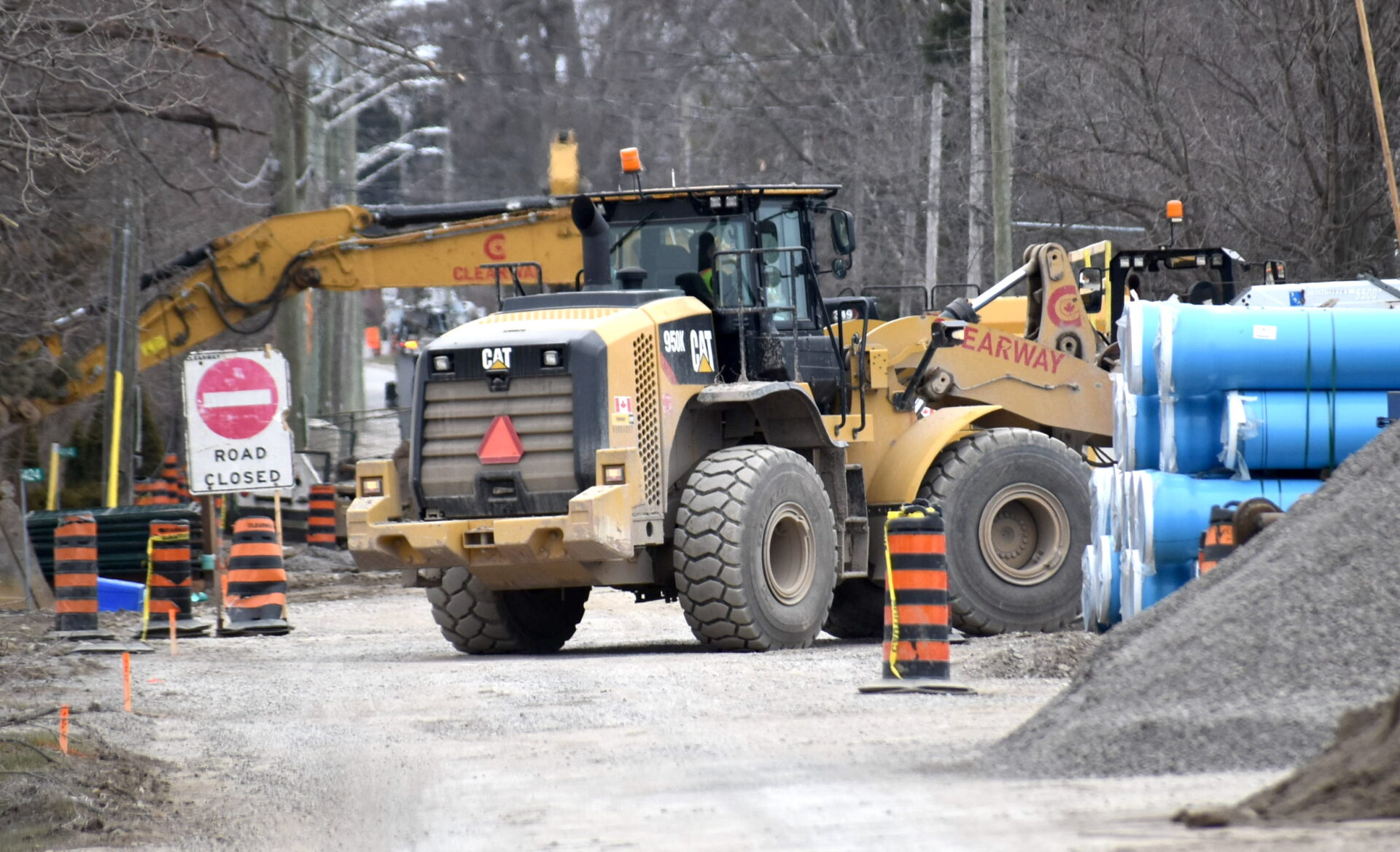 Water infrastructure construction in west Wellington. (Jason Parks/Gazette Staff)
A regional water treatment system is the preferred long-term solution over continued investment in the County’s existing water and wastewater plants. That conclusion was clear in Director of Development Services Cristal Laanstra’s report on the state of the County’s water infrastructure.
Condition assessments commissioned this winter found both Picton and Wellington facilities would require significant investment simply to remain operational, while a regional system would lower long-term operating costs, preserve $40 million in in provincial and federal grants, eliminate source water concerns in Picton, and meet growth as it occurs.

Council approved a series of recommendations to emerge from Ms. Laanstra’s report. The final motion asks staff to prepare a detailed financial strategy for the regional servicing scenario, estimated at $205 million; negotiate developer front-ending agreements to offset costs; pursue further provincial and federal funding opportunities; undertake public engagement; and complete required environmental assessments.
Ms. Laanstra’s report recommends replacing the 2.4 per cent growth forecast used for planning with a one percent annual assumption. The lower forecast would still see the County grow by more than 9,000 residents over the next 25 years.
Presenting the report, Ms. Laanstra acknowledged there were no perfect solutions.
“There is no risk-free path forward,” she told Council. “The purpose of today’s report is to present a balanced, evidence-based assessment of the options available and to support Council in making an informed decision.”
She stressed that adopting the one percent growth rate was a planning decision, not a commitment to construction.
“A growth rate is a planning assumption,” Ms. Laanstra said, noting, “it does not regulate or limit the building permits that can be issued annually.”
Mayor Steve Ferguson praised the report for helping Council navigate a technically complex issue.
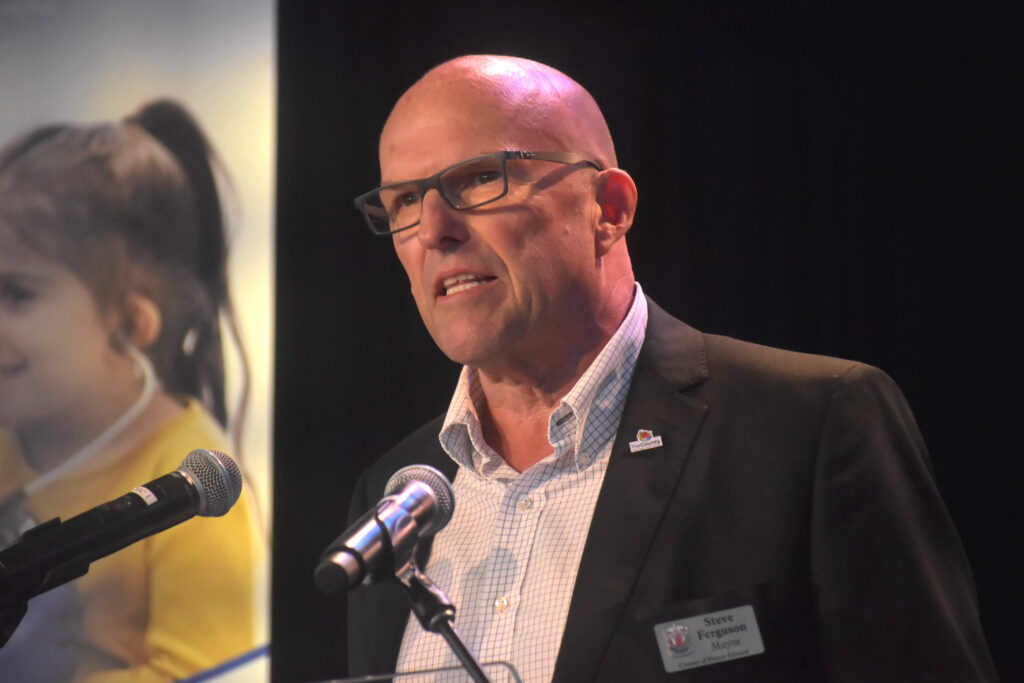
“It synthesized so beautifully a very complicated subject matter,” he said. “None of us are engineers or experts in this, but it was really terrific to read something that, although still challenging, was easy for us to understand and enabled us to talk about this subject.”
He added that he believes one percent is a conservative planning assumption but said the preferred Option, 2B, leaves room for future expansion.
“I, too, believe that one percent is under the mark,” Mr. Ferguson said. “Under 2B there is the opportunity to expand the system as growth demands.”
Councillor John Hirsch said he believes growth could ultimately exceed one percent but supported the recommendation because the phased approach avoids the financial risks of overbuilding while preserving flexibility.
“I’m one of those who thinks that growth will exceed one percent. By how much? I don’t know.”
Councillor Brad Nieman said the County faced a similar decision over the Consecon water system. Although it was oversized for the community at the time, the investment has served residents for decades.
“We chose the forward-thinking option,” he said.
Councillor Roy Pennell cast the lone dissenting vote, saying he remained unconvinced the financial risks had been adequately addressed.
“I’m scared to death that we’re gonna break the county, break every taxpayer in the county,” Mr. Pennell said.
Council’s decision directs staff to return with a detailed financial strategy for a regional water plant in Wellington while continuing discussions with funding partners and developers. No final decisions have been made.
See it in the newspaper