Canada’s oldest weekly newspaper
© 2026 The Picton Gazette
Since 1830


 0° Clear
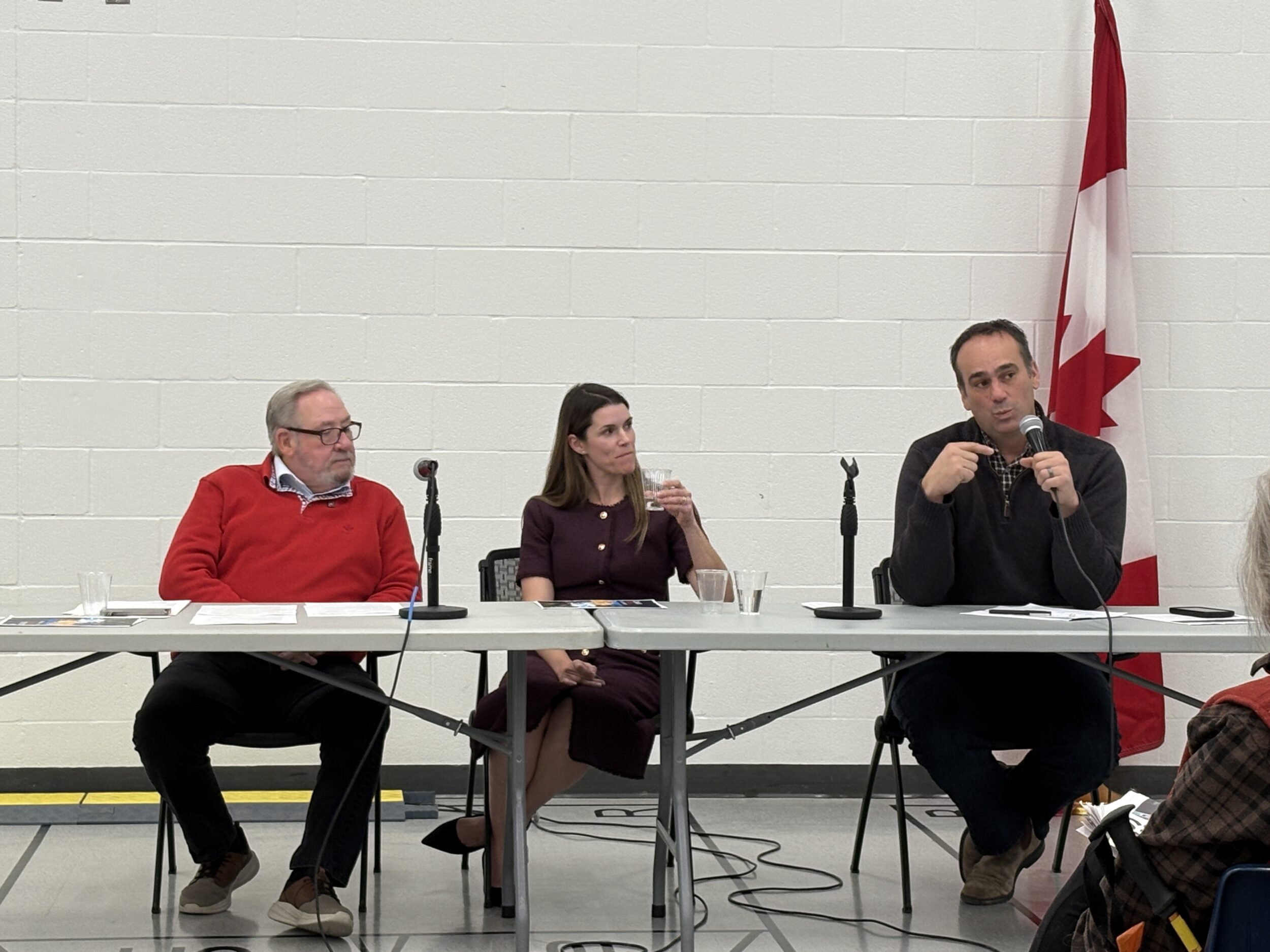 Liberal MPs Chris Malette of Bay of Quinte, Emma Harrison of Peterborough and Mark Gerretsen of Kingston and the Islands. (Karen Valihora/Gazette Staff)
The Bay of Quinte Federal Liberal Association hosted Liberal MPs Chris Malette of Bay of Quinte, Mark Gerretsen of Kingston and the Islands and Emma Harrison of Peterborough in Belleville at the end of November for a “Table Talk” discussion before an audience of about 80 Liberal supporters.
The “red wave” of this year’s Federal election swept many rookie MPs to Ottawa, our own Chris Malette among them. He is emerging as an adept, comfortable and unusually forthright public speaker, clearly galvanized by Federal politics.
While food security was the focus issue, a wide-ranging conversation linked local and systemic poverty to globalism, advanced monopoly capital, agriculture and climate change, growing inequality, inflation, unaffordability, and tariffs.
The MPs agreed new PM Mark Carney is bringing structural and strategic change to the Canadian economy.
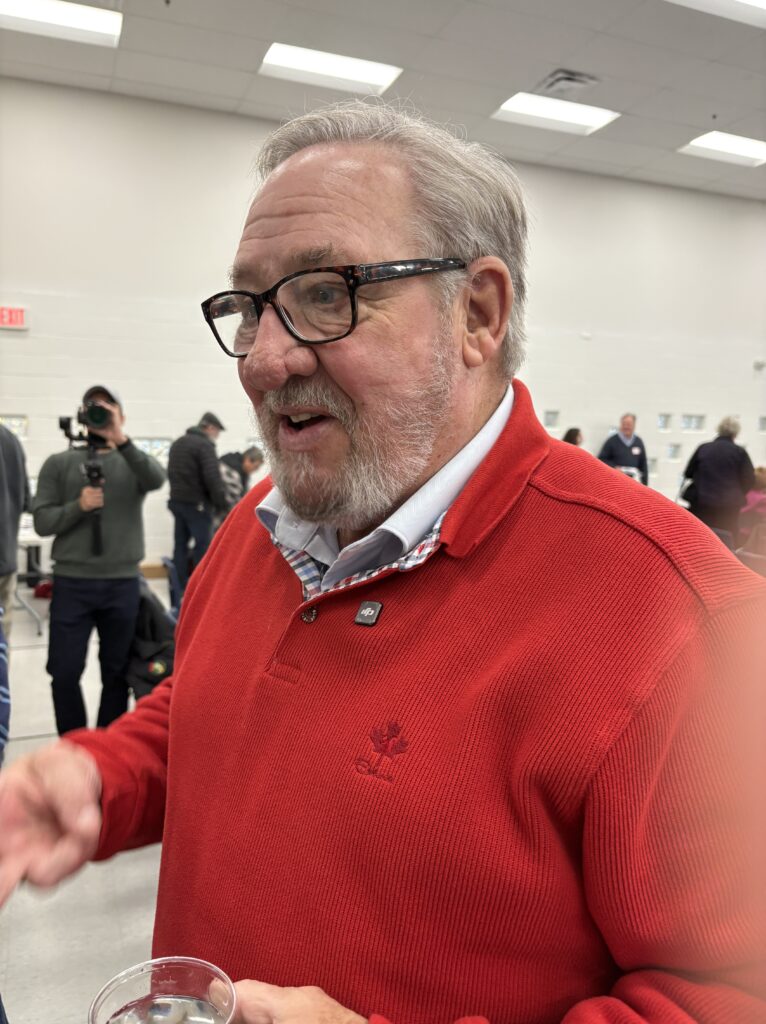
“He doesn’t understand a lot about politics,” noted Mr. Gerretson, who has won election as MP four times and represented Kingston in Parliament since 2015. “He’s not a politician, if that means a master of the snappy retort or the perfect sound bite.
“But what he does understand is how to manage problems strategically, over the long term, and on an international scale.”
“What he is doing for the very first time for Canada is building relationships around the world in a meaningful way,” said Mr. Malette.
“I’m too new to know the whole story,” he continued, “but I hear the enthusiasm in the Liberal caucus that I am seeing and feeling right now is a total night and day change since the departure of the previous PM.”
Mr. Malette was emphatic. “I would follow this guy into battle.”
Accordingly, the MPs were unusually keen to talk international relations. Mr. Gerretson cited the war in Ukraine, for example, which produces half the global wheat supply, as well as climate change, which is driving inflation related to food shortages, as larger causes behind food insecurity. He also warned that monopoly capital is not just an American problem.
“Loblaw controls 43 percent of the food supply in Canada. The largest food supplier in the US is Walmart, but it controls just 20 percent of that retail market there.”
Audience members raised the Ford government’s
underfunding of colleges and universities like
Belleville’s Loyalist College,
and asked how the MPs could counter regressive provincial policy.
They agreed federal-provincial relations were “tricky.”
The MPs did not lose sight of the region, which Mr. Gerretson noted it is in trouble. “One out of three people in Kingston experience food insecurity. The numbers indicate crisis proportions, and that affects kids, retail, and the larger economy.”
Several new programs address low-income households. Foremost is automatic tax filing. “5.5 million low-income Canadians will automatically receive benefits,” said Mr. Malette, noting filing will be retroactive, and include automatic GST and HST credits, the Canada Child program and disability benefits.
Mr. Malette noted the “Ozarks-style poverty” crippling the regions north of PEC. “It’s linked to low wages on one hand and to high home costs on the other. And it’s fueling homelessness, mental health issues, and addictions.”
“Canada is moving toward a much smaller middle class,” noted Mr. Gerretson. “The government is working to raise wages. Strengthening the middle class is a priority, because the economy has to be grown from the middle out,” he said. “That depends on wages.”
Mr. Malette, who sits on the National Defense Committee, said Canada faces “existential threats from Russia, which is the dragon at our gates.” If Russia succeeds with Ukraine, he noted, Poland and Latvia are next.
“Canada must be able to responsibly, effectively and rapidly respond to threats,” he said, touting the recent Liberal announcement of $6 billion for CFB Trenton, and noting the Liberals have increased entry level military salaries by 20 percent.
Other local initiatives include Sprague Foods’ Belleville canning factory. “We are trying to help it expand,” said Mr. Malette. “Sprague has now moved into every Costco in the U.S., which is a major story, but it needs to expand its factory, which is bursting at the seams. It could become a regional juggernaut.”
A roadblock to federal plans for job and wage growth, however, is the province’s Conservative government. Wages, like education, are a provincial responsibility.
Audience members raised the Ford government’s underfunding of colleges and universities, particularly Belleville’s Loyalist College, and asked how the MPs could counter regressive provincial policy. They agreed federal-provincial relations were “tricky.”
“Ontario is an outlier in this respect in Canada,” noted Mr. Gerretson. “This is not a national problem; it’s an Ontario problem. Other provinces are not starving their education systems.
“The investments we are making in the skilled trades could filter down,” he noted, “even though the province is shuttering culinary programs. We don’t need that.
“We also need to stop treating the skilled trades as less meaningful or important than the professions.” He warned that AI could make the skilled trades far more valuable as a career choice. “AI makes the skilled trades a surer bet.”
But Mr. Gerretson also noted the underfunding of universities and colleges started with the Liberal government of Dalton McGuinty, which, froze domestic tuition in 2012.
In 2018 Premier Ford reduced tuition by 10 percent — and then froze that. “The result is that in 2025, a domestic student pays 10 percent less in tuition now than they did in 2012.”
The Liberal government wants to remove the tuition cap.
Mr. Malette was characteristically blunt in response to a question about the Premier’s move to eliminate local conservation authorities. “Sometimes we wonder if Ford could come up with anything to anger us more. This is just boneheaded. It is wrong and harmful. As a former board chair of QC, I will oppose that any way I can. I am steadfastly opposed to any of those cuts.”
On the issue of a universal basic income, Mr. Malette was lukewarm. “That’s not really a federal issue. It’s a provincial issue.” But Mr. Gerretson noted, “Basic Income requires provincial buy-in, but AI will make it increasingly central to policy making.”
See it in the newspaper