Canada’s oldest weekly newspaper
© 2026 The Picton Gazette
Since 1830


 24° Mostly Cloudy
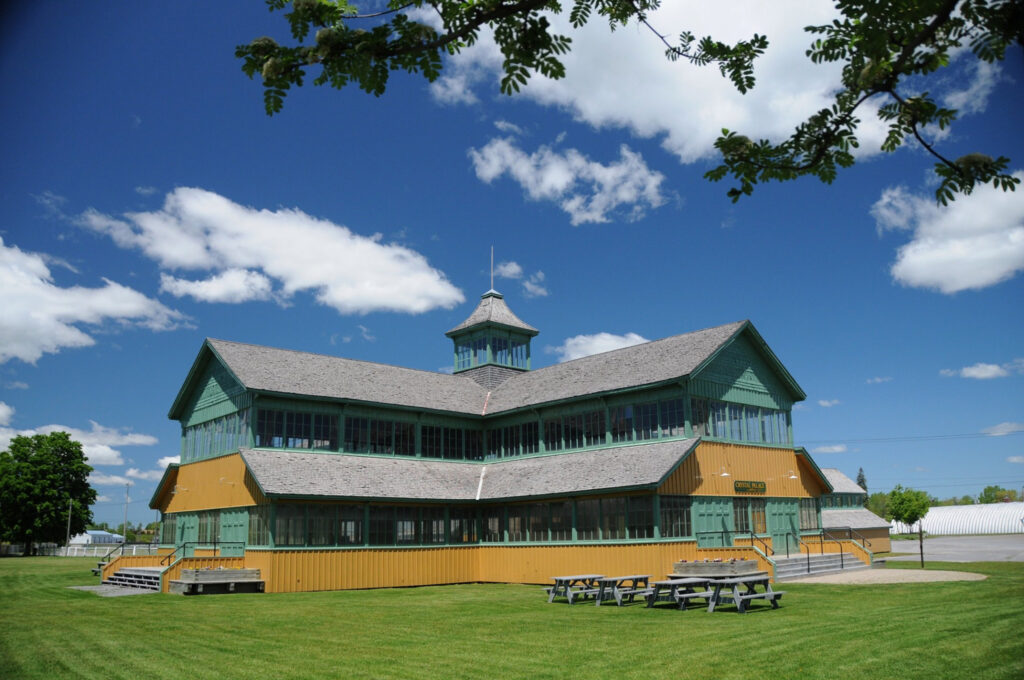 Picton’s Crystal Palace. (Photo by Peggy DeWitt)
The Built and Cultural Heritage Advisory Committee (BACHAC) considered WSP Consultant’s newly released Master Plan last week. The report fulfills a $135,000, two-year contract. It describes criteria for and examples of built and cultural heritage, including landscapes and vistas, throughout the County. Categories include Indigenous landscapes, lighthouses, fishing, agricultural heritage, and transportation routes.
It also proposes policy changes, such as hiring a municipal Heritage Planner and making heritage a central feature of the County’s tourism marketing.
While the “Cultural Heritage Strategy” section of the Plan was praised — in a comment to the committee resident Gord Gibbins called it “a gold mine of information and needed recommendations” — the Committee agreed the list of heritage sites for designation is woefully incomplete.
While the “Cultural Heritage Strategy” section of the Plan was highly praised for its important information and recommendations — audience member Gord Gibbins called it “a gold mine of information and needed recommendations” — the Committee agreed the list of heritage sites to be prioritized for designation is woefully incomplete. The list is included in the report under Appendix B.
Mr. Gibbins stressed both the incompleteness and the many inaccuracies of the list, noting that it missed information on built heritage outside South Marysburgh.
“The problem is the apparent lack of review of the County’s 210 Built Heritage “listed properties.” Only those in South Marysburgh seem to be included, despite the fact that areas of development were to receive priority analysis. Where is the analysis for Picton, Hallowell and Wellington, to name three key wards with significant development proposals?” he asked in comments made to the committee.
“More odd is the fact that the Working Group efforts and successful designations all came from South Marysburgh,” he continued, noting the ward was heavily over-represented on the Master Plan’s list of priority designations, with little from the County’s many other wards.
“Where does it go from here to protect heritage from Bill 23?” he asked.
Changes to the Ontario Heritage Act introduced under Bill 23 gave municipalities a deadline of January 1, 2027 to give official heritage designation to properties listed on their heritage registries. Listed properties that remain undesignated by the cutoff date will be delisted and lose all protection.
Members of the Heritage Committee were concerned that approving an incomplete list of priority heritage assets could interfere with the work that needs to be done under this timeline.
“It could cause inaccurate prioritization, which could permanently weaken heritage protection and make data accuracy a little more fragile or inconsequential,” said committee member Valerie Porter.
But County Planning Coordinator Scott Pordham noted,“it would require a change-order to add additional work elements to the work plan.” WSP’s contract would have to be extended, entailing additional compensation.
Mr. Pordham also noted that WSP was willing to take direction from Council for further work.
Councillor John Hirsch cautioned against asking WSP for more work, arguing that the Master Plan is intended to be a “living document” that can be shaped by Council direction and community input.
“WSP has essentially done their work,” the Councillor said. “That doesn’t mean the plan itself should be considered finished. Council and indeed staff can add to the plan without necessarily using the consultants.
”If Council wants WSP to do more work, we’re going to have to find some money for it.”
Council budgeted $200,000 for the CHMP.
“If there are errors, if there are information gaps, if there are major questions about whether comments have been considered that came from the public, I think those are things that WSP as a professional consultant would want to resolve before their draft goes forward,” said Bob Waldon.
But not everyone agreed. “This is a five-year effort so far to fulfill a requirement in the Official Plan. WSP responded by doing far more work than they ever contemplated given the budget,” said committee member Edwin Rowse. “I thought the budget should have been at least twice what it was.”
The BACHAC settled on a motion to receive the Cultural Heritage Master Plan as a “living document” and asking that Council direct staff to work with the BACHAC and community partners to develop recommendations for designation to be brought forward to Council in six months. The motion also asks that Council direct staff to work with the BACHAC on mitigating risks to listed heritage properties.
In six months, “work will still be ongoing but it will be a document that Council can approve without problems,” noted Mr. Rowse.
The Cultural Heritage Master Plan comes to the Planning and Development Committee on February 18th.
See it in the newspaper