Canada’s oldest weekly newspaper
© 2026 The Picton Gazette
Since 1830


 24° Mostly Cloudy
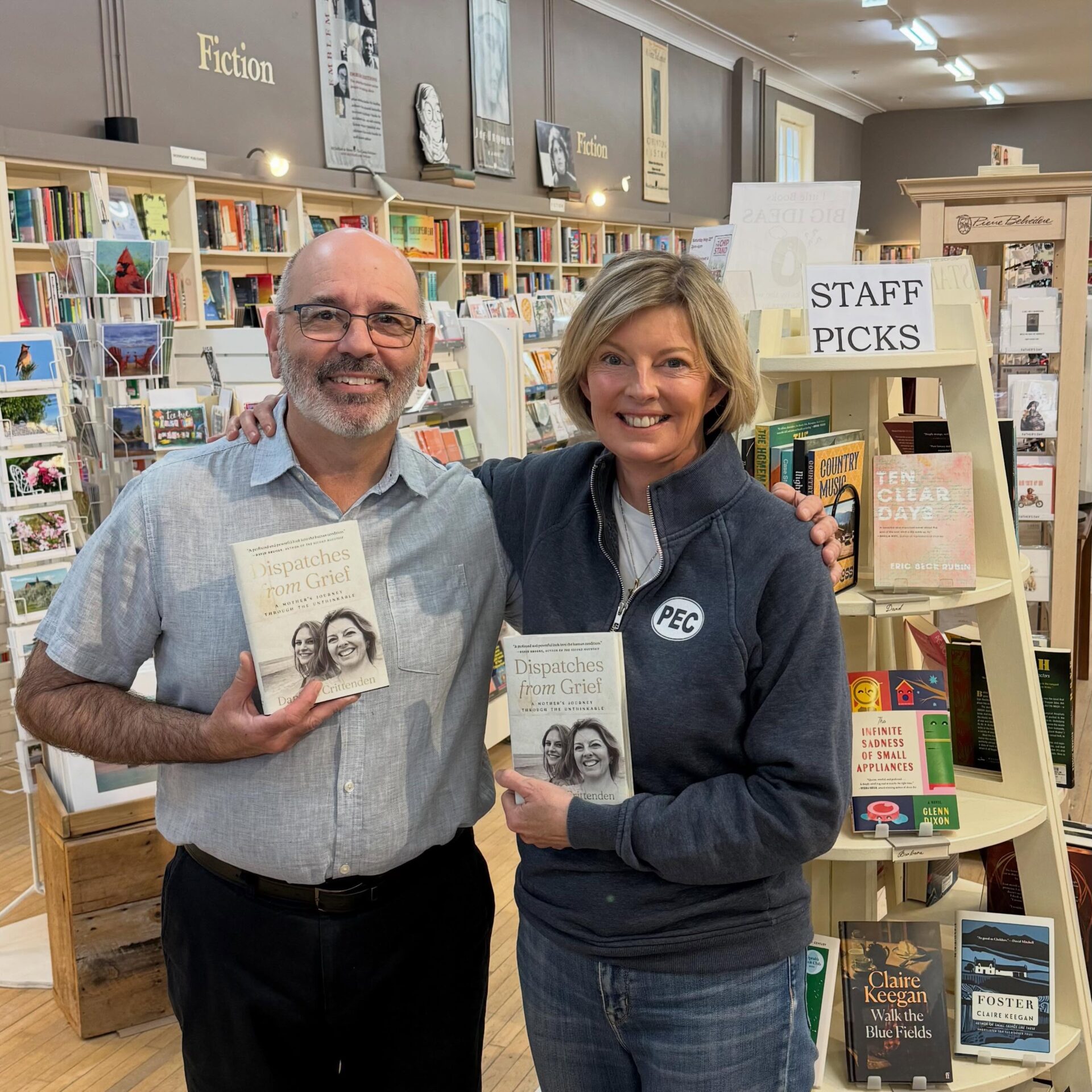 David Sweet and Danielle Crittenden at Picton’s Books & Company.
The news comes as it generally does, in a phone call. The kind that cracks the world into two parts, Before and After. Danielle Crittenden’s beloved 32-year-old daughter, Miranda, had been found dead in her Brooklyn apartment.
The opening chapters of Dispatches from Grief tell a riveting story of the first, horror-filled moments and days after that call. The narrative is spare, drained of almost all feeling, as Danielle and her husband, journalist David Frum, go through the motions of the Bureaucracy of Death.
Bags packed, they fly to New York to see if they can visit Miranda’s apartment, but it has been sealed. They book a hotel, where they are joined by a group of Miranda’s friends, “a congregation of the stunned.” Later that night, they hire an Uber and visit the morgue, where their daughter’s body lies in a refrigerated drawer.
“The doors were locked. We stood there anyway, as close to Miranda as we could get.” They sit on the sidewalk and recite Psalm 121. “That February night was as cold and bleak as February gets.”
When one is overtaken by the grief of loss, there’s a feeling that it should pay, somehow. All this work, this suffering, should set things to rights, restore our loved one. We go over their accounts, settle the estate, hoping that balancing the ledgers will bring back the dead.
When that doesn’t work, we think all this suffering should help us, somehow. Lead to some sort of silver lining. Compensate. But this book was conceived in part as an answer to such platitudes. There is no reward for your grief, Crittenden tells us.
Weeks after her death, a court order arrives authorizing Danielle to visit Miranda’s apartment while it’s still in probate. She is to obtain estate documents only, but schemes with her surviving daughter, Bea, to evade the police and clean the place up.
Visiting the scene of Miranda’s last days and hours allows her mother to piece together a sense of what happened. Miranda had been diagnosed with a benign but very dangerous brain tumour six years earlier. Surgery removed it, but took her pituitary gland as well.
Danielle remembers the breeziness of the surgeon who assured them that medication can balance everything out.
It does — but Miranda must follow a delicate, daily regimen of injections and pills to keep her hormones balanced. In the weeks leading up to her death, she had a lingering cold. Nobody worried too much. Miranda was adept at taking care of herself by then. Or thought she was.
But her cortisol levels were too low, and the situation was critical. Danielle agonizes over the doctor who didn’t explain how serious this was, over how Miranda could take such risks, over what happened those last few days.
They had spoken on Valentine’s Day. Getting ready to go to different parties at the same time, mother and daughter chatted as they did their makeup. Miranda sent a selfie of her outfit. Danielle noticed how thin, how fragile she looked.
The phone call came early in the morning of February 16.
Now, in the apartment, there is disarray.
“Bea and I paused on the threshold, absorbing the suspended life before us. Miranda had left clues as to how she spent her final day. Very sick, it appeared. The sparkly heels she’d worn to that last party lay kicked off in the middle of the living room. A pile of coats was heaped on the sofa — she must have tried on several. It was unlike her to leave such disorder. Clearly, she’d had no energy left for even small tasks. And yet, and yet…Why didn’t she go to the doctor? Why didn’t she up her meds? Why didn’t she call someone? Why didn’t she get help? The familiar, agonizing questions lay strewn about me, never to be answered.”
But the disorder, at least, can be put to rights. While Bea tackles the kitchen, Danielle tidies the bedroom. Puts sheets in the hamper. Hangs up clothes. Cries her eyes out. Straightens the bed.
The importance of these gestures will be familiar to anyone who has ever felt utterly helpless. The signal strength of this book is to lay bare the relentlessness of the suffering of losing a child, of losing any loved one too young, too early. Whatever comfort is to be found is here, in this chronicling.
It acknowledges, first, the importance of those who received Danielle and David in the Alternate Universe they find themselves in on the other side of that phone call. “It’s a country you don’t know exists until you arrive in it,” writes Crittenden.
They have bad news. “The person you were died with your child,” they tell Danielle. “There is no ‘healing’. No journey back to yourself.”
“On that February morning, we became entirely different people wearing the same faces,” she notes. But these denizens of the land of the dead also console. They share the same burden.
Second, vivid, pulsing love runs through this book of pain: the grief is as overwhelming as it is because Danielle loved her daughter absolutely. Would give anything to have died in her place. To her, being a mother means to “love another so selflessly that you would gladly —gladly!—absorb any pain she might suffer, even give your own life for hers.”
While the book refuses an easy answer or way out, it offers glimpses of another way of living. There is one in the moment Danielle, now an old hand, offers her own, hard-won counsel to shocked new initiates to the Land of Grief. There’s another in the unveiling of Miranda’s gravesite, a garden in Glenwood Cemetery where you can sit and drink a martini in the golden light of a summer evening. And yet another in Danielle’s love for the family that survives Miranda.
There is grace in this writing. Crittenden is an enormously giving companion. In her hands, the endlessness of grief starts to suggest an endless natural resource, not one anyone asked for, but one we can live with.
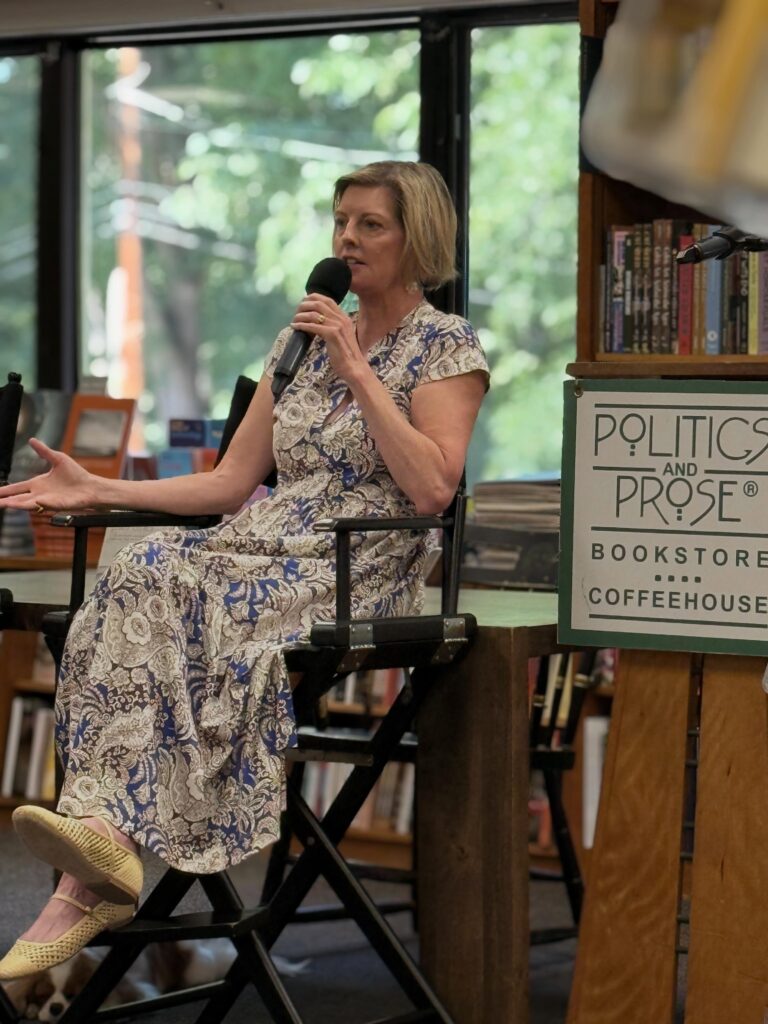
Author Danielle Crittenden and journalist David Frum appear in conversation at The Regent Theatre Sunday 2 August at 7pm to talk about Danielle’s book and the loss of their daughter. Tickets @The Regent. All proceeds benefit Glenwood Cemetery.
See it in the newspaper