Canada’s oldest weekly newspaper
© 2026 The Picton Gazette
Since 1830


 11° Sunny
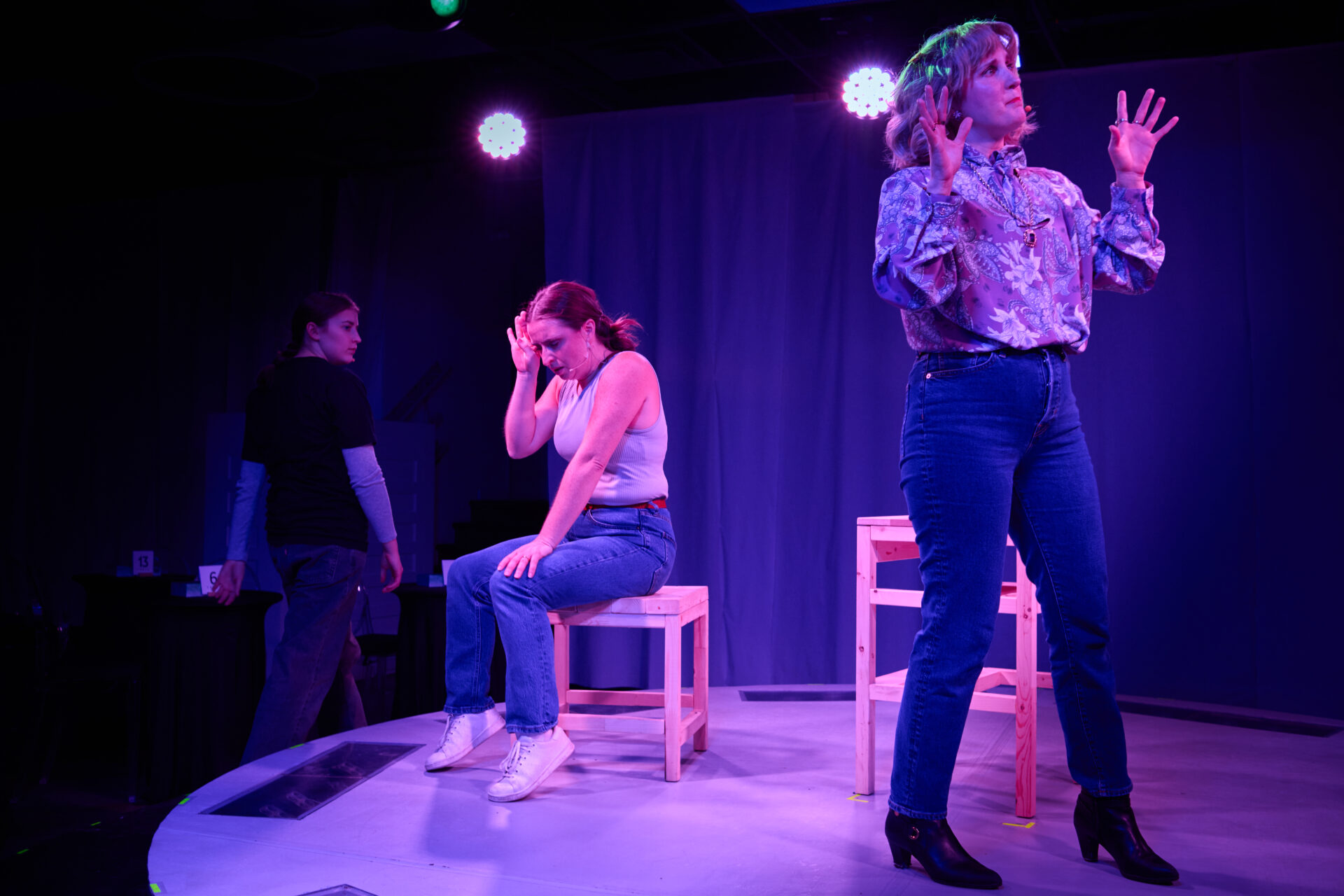 Shatterbox’s production of the musical Next to Normal boldly puts actors on display in the round, to suggest the complexity of family dynamics and competing interpretations. (Photo by Sean Ferguson)
From the moment you walk in, you are promised tears. The people at reception will warn you. Anyone you know who has already seen it will warn you. As if that weren’t enough, the boxes of tissues adorning every seat will warn you.
But to call Next to Normal just a tearjerker is to undersell it.
While the production occasionally veers into the sentimental, it also manages to avoid the trappings of a work manufactured solely to produce tears. The total commitment of its actors and some brave directorial choices elevate this play into something unusually accomplished.
Take the setting, which is in the round. The audience surrounds the stage, and the actors are exposed to view from every angle. It creates a sense of total immersion. There is nowhere to hide, no room to cheat, because everything is on display.
That vulnerability serves this play’s equally vulnerable subject matter; we can see how exposed the actors must feel.
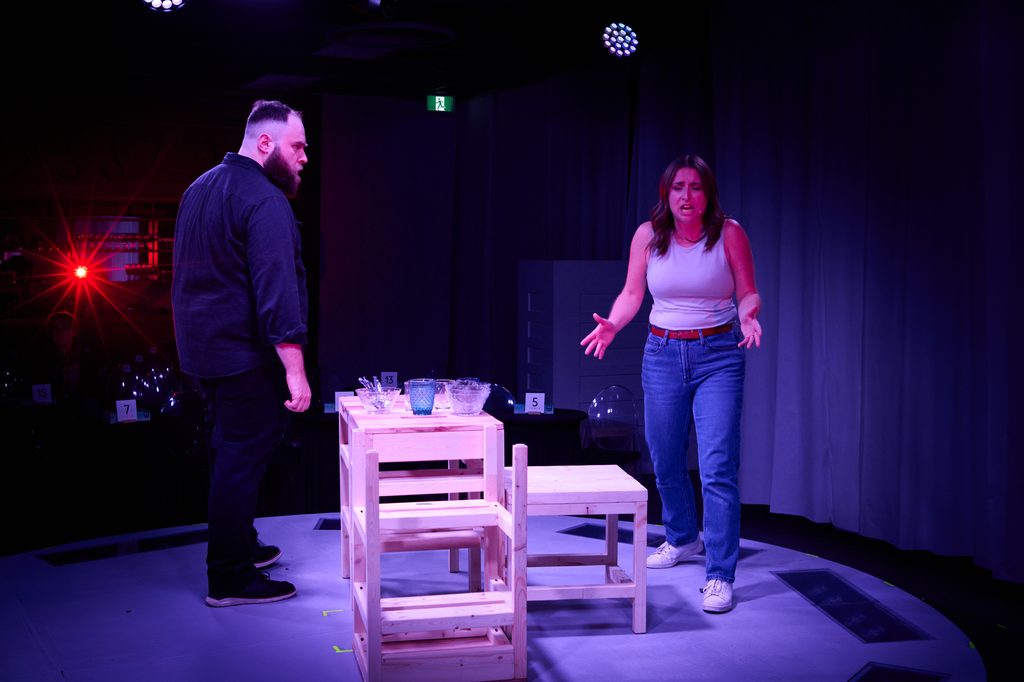
Likewise, the audience experiences the same scenes from different perspectives, a fitting arrangement for a musical occupied with competing versions of the same experience.
Presented by Shatterbox Theatre at The Cape in Picton from Nov. 12 to 21, Next to Normal is the Pulitzer Prize-winning rock musical by composer Tom Kitt and lyricist Brian Yorkey. The story centres on Diana Goodman, a mother living with bipolar disorder, and her family’s struggle to understand and navigate her illness.
Her husband, Dan, is desperate to hold the family together, while their daughter, Natalie, is left to fend for herself. The presence of their son, Gabe, complicates a family dynamic already strained by grief, memory, and the quest for something resembling normalcy.
At its Broadway debut in 2009, Next to Normal contributed to making conversations about depression mainstream. Elizabeth Wurtzel’s Prozac Nation brought a deeply personal account of depression into the cultural conversation, while David Foster Wallace’s short story, “The Depressed Person,” offered a portrait of a woman whose suffering seemed to exhaust everyone around her.
The contrast speaks to a lingering discomfort with women whose pain refuses to remain private — or palatable.
Nearly 20 years later, this production invites a different reading of the men surrounding its central character. Dan, Diana’s husband, initially resembles the familiar television husband of the era: think Everybody Loves Raymond or The King of Queens. He’s a well-meaning, hard-working man who loves his wife, but is emotionally ill-equipped to understand her. Then, that character might have inspired more compassion. Today, his insistence on fixing Diana, his inability to meet her pain, and his expectation that she comply with his efforts are harder to overlook.
While Diana is consumed by her delusions, Natalie pleads for her parents to notice her, to attend her recitals, and to acknowledge the life unfolding in front of them. Both Natalie and Diana are desperate to be seen.
This production’s great strength is the remarkable talent of its cast. Susan Del-Mei and Thomas Medeiros bring tenderness and tension to a relationship clearly built on love, but burdened by misunderstanding.
Even more impressive are the younger performers. Abigail Phillips as Natalie and Kayla West as Gabe deliver outstanding vocal performances, matched by visceral emotional conviction. Jackie Hsing, as Henry, complements both, and evokes Gossip Girl‘s Dan Humphrey.
Stephanie Rose is equally compelling in the dual roles of Dr. Fine and Dr. Madden. While Dr. Madden initially comes across as villainous, she gradually shows a more human side. The shift adds welcome complexity to a role that could have suggested merely an embodiment of the medical system’s shortcomings.
The score is a delight. The alt-rock that defined so much of the nineties is enjoying a resurgence, with emo, pop punk and indie sleaze finding new audiences, and even once-maligned bands like Creed and Nickelback enjoying a reappraisal. What might have sounded dated a few years ago now feels current. “I Miss the Mountains,” and, “Didn’t I See This Movie,” are devastating here.
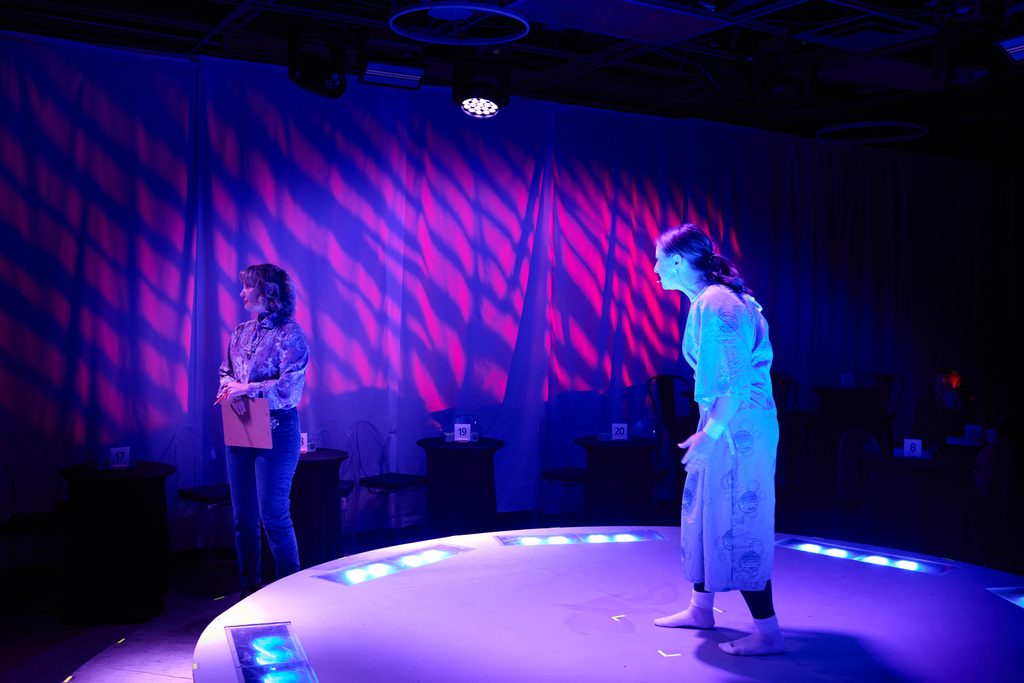
Lighting Designer Phil Dowling makes some excellent lighting choices. During one song, the shadows of Diana, Dan, Natalie, and Henry appear together on the wall. The image mirrors the two relationships, suggesting that familiar patterns can perpetuate across generations.
Through it all, The Cape continues to show its versatility as a venue, and the staff remains consistently inviting, ensuring every guest feels entirely at home from the moment they arrive.
I can’t say whether or not you will actually cry, but keep the tissues close.
Next to Normal runs through 21 November. For tickets and information visit: https://nexttonormal.ca/.
See it in the newspaper