Canada’s oldest weekly newspaper
© 2026 The Picton Gazette
Since 1830


 19° Mostly Cloudy
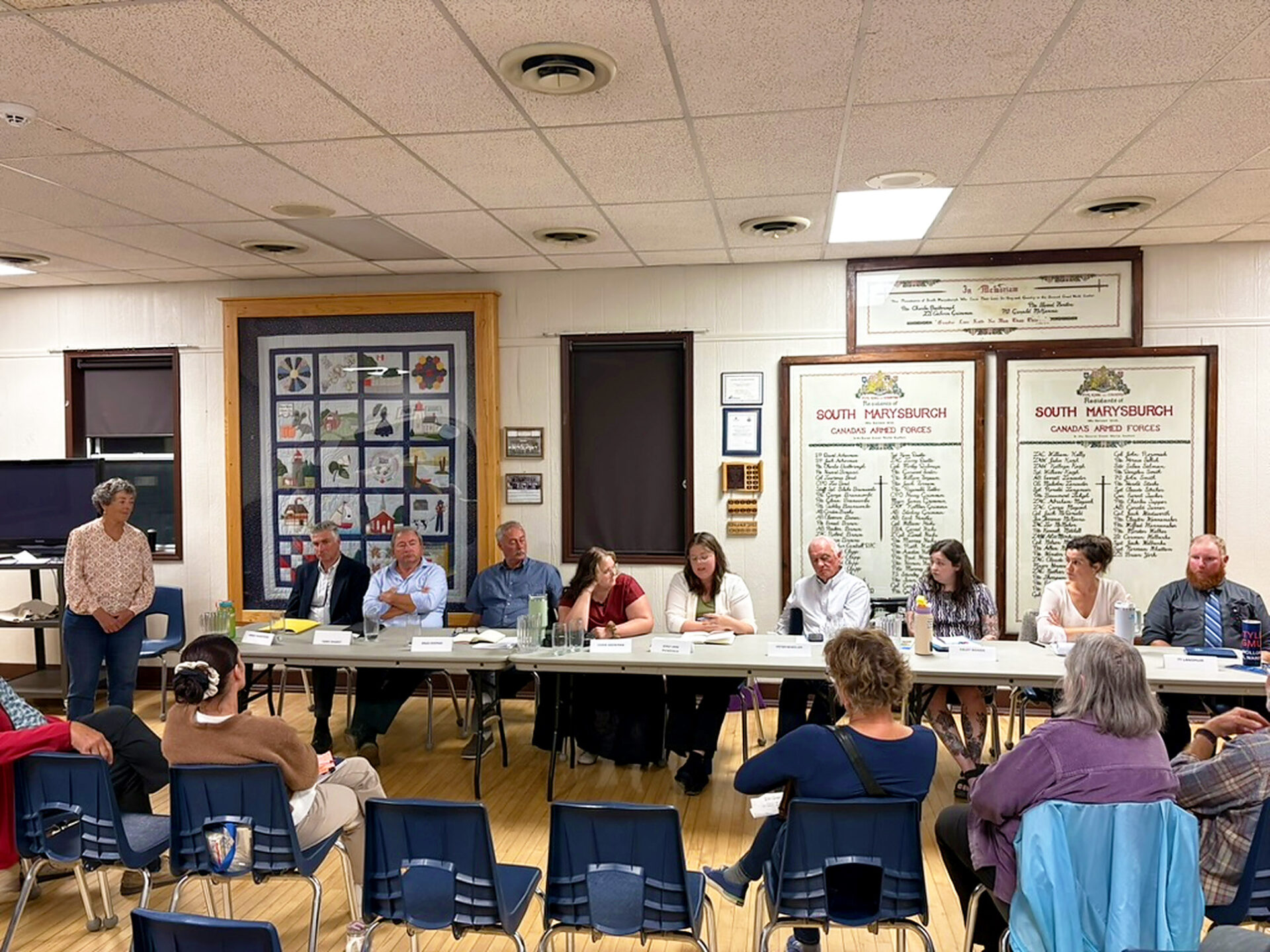 Mayoral, councillor and trustee candidates meet the public. (Photo: Brittiny Blodgett/Gazette Staff)
Mayoral candidates Ernie Margetson, Brad Nieman and Terry Shortt, along with Athol ward candidates Emily Jane Pickstock, Haley Woods, Anna Zak and Tyler Langmuir, responded to questions provided in advance at a forum hosted by the South Shore Joint Initiative.
1. What documents govern land-use planning, and how does the planning process work?
Mr. Margetson pointed to the Planning Act, Provincial Planning Statement, Official Plan and zoning bylaw to explain that provincial policies establish the broader framework, which the County’s Official Plan applies to the municipality’s particular geography and circumstances.
Mr. Nieman said the process begins with pre-consultation between developers and municipal staff, who determine which studies may be required before an application is formally submitted, including environmental, traffic and stormwater studies. “I am not an expert in planning, and I don’t have to be an expert in planning,” Mr. Nieman said, adding that councillors need to understand the information presented to them, do their homework and know where to get answers.
Mr. Langmuir called for greater clarity in the development process, saying delays can result when applicants repeatedly encounter additional requirements.
Those in attendance had questions about Cold Creek. Mr. Nieman had described the area as “the best land in the County,” saying it “should never have ever been in the secondary plan.”
Mr. Shortt, who has served four terms on council and as both vice-chair and chair of the planning committee, said he would pursue a moratorium on large-scale development.
“We need to take the time and ensure development matches the environment it goes into,” he said.
2. The County is an ecologically unique area. This is recognized in the 2021 Official Plan. Please explain how the plan protects the special environmental aspects of the County.
Mr. Margetson elaborated on the plan’s policies for maintaining and enhancing the natural heritage system, including protections for provincially significant wetlands, coastal wetlands and areas of scientific interest.
“If we have an attitude that we are protecting these things, then that has to start right at the beginning,” he said.
Ms. Pickstock emphasized recognition of relationships with Indigenous communities and Indigenous land-use practices within the plan.
“Indigenous land use practices are truly sustainable to their core,” she said.
Ms. Woods connected environmental protection with the broader question of what kind of community the County wants to remain, including the preservation of green spaces and independent farms.
Ms. Zak addressed wind-turbine development to note any reconsideration of the County’s “unwilling host” policy should include environmental and location requirements. She would like to understand the full life cycle of turbines, management, removal, and long-term effects on the environment and soil.
3. Do you have any suggestions for restructuring the council to make it as efficient as possible?
Mr. Margetson said whether voters are represented equitably was key. He pointed to ward boundaries that divide communities and proposed a model based on four large wards, each representing roughly 6,700 voters.
Mr. Langmuir and Ms. Woods both cautioned against reducing council to the point that residents lose local representation or connections with their councillors.
Mr. Nieman said he had previously supported reducing council from 16 members to 14 and would support further reductions if it could help prevent the County from being forced into a regional government.
Mr. Shortt proposed 10 wards, one representative per ward, plus the mayor, who would vote only to break a tie.
See it in the newspaper