Canada’s oldest weekly newspaper
© 2026 The Picton Gazette
Since 1830


 13° Cloudy
 Ernie Margetson, Terry Shortt and Brad Nieman were at The Regent Theatre for a conversation hosted by the Chamber of Commerce Monday 5 October. (Josh Thomas/Gazette Staff)
Clear platforms emerged at the first of several Mayoral Q&A sessions to be hosted around the County before election day October 26. The candidates answered 15 questions compiled by the Chamber board. They were not told the questions in advance. One, from the Quinte Home Builder’s Association, asked how to guide responsible growth.
Mr. Nieman said the County currently has a plan in place for one per cent annual growth, which means about 150 new homes a year — a projection he does not see coming to fruition over the near term.
“The most housing we built in a year, in the best of times, when the boom was on, was 100. The economy is having a rough time right now, nothing is booming. As far as infrastructure goes, if we put $255 million into the budget, if we don’t get houses built, by the time we use the plant, it’ll be money wasted.”
Mr. Shortt was equally blunt on large- scale development: he would shut it down entirely for the time being. “We have on the books, planned and approved, 2096 homes. The population of the County is 24,500. It would double if that many homes are put into place. I don’t see the growth coming. [Fact check: the full-time population of the County was estimated at 27,600 in 2025. 2100 homes at 2.3 people per home, would bring 4800 people, or about one-sixth the current population. The County has about 4000 new units on the books by 2032].
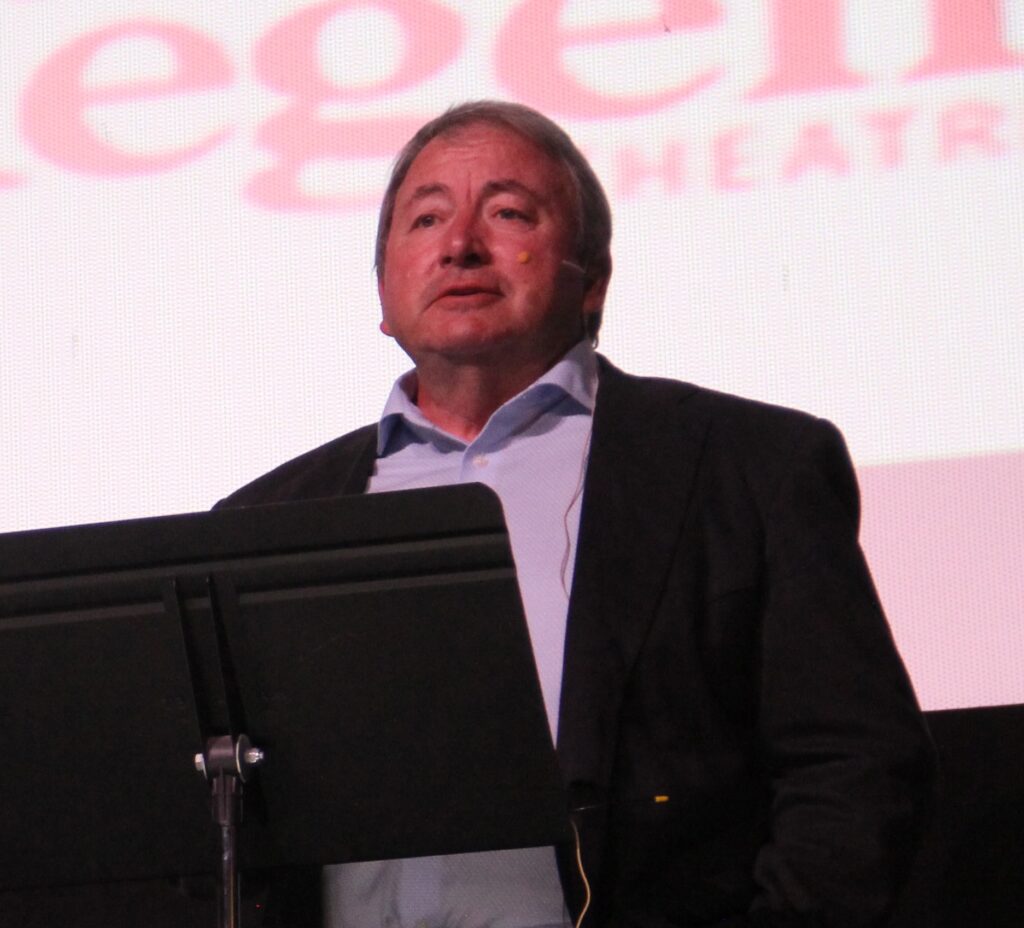
“We have closed schools,” he continued. “We’re not an attraction for young people. If I am made mayor, I will, if possible, put a moratorium on large-scale development.”
But Mr. Margetson said there is room for growth. “As far as growth goes, if it does happen, we can accept it. We have a number of subdivisions already in planning stages and that will be organic growth.”
“We need a Development Charges study,” he stressed. “We’re dealing with a connection charge bylaw in Picton and a DC in Wellington which may be obsolete,” he said, arguing that DCs will bring in important revenue.
The candidates were asked about raising the Municipal Accommodation Tax (MAT) from the current 4 percent on nightly stays to 5 or 6 percent. While Mr. Shortt rejected increasing the tax, he argued subjecting Sandbanks visitors to the MAT could provide a big income boost without putting the cost on small businesses.
“The problem with raising the MAT, in talking to operators, most of them are absorbing the tax so users don’t have to. Raising it will only dig into their pockets further. I think Sandbanks should pay the MAT. As much as it is a provincial park, it is part of the County. If we did that, we would have a million customers paying four per cent.”
Currently, the MAT can only be applied to roofed accommodations.

Though initially supportive of raising the MAT, Mr. Margetson has altered his stance. “We wouldn’t do it without consultation from operators in the County, and I don’t know we ever would. If we did, it needs consultation. Tourism is so important. We don’t want to kill the golden goose here.”
Mr. Nieman said he would focus on identifying those Short Term Accommodations (STAs) operating without a licence. “We have illegal STA’s operating. We need to find those, get them legal, and create more revenue that way.”
Mr. Margetson hopes to stick to cost- of-living increases. Mr. Shortt is running on a four per cent annual increase, which he also considers cost of living. Mr. Nieman also believes in cost of living increases, because the County must build up its depleted reserve funds.
“I would prioritize taxes to increase our reserve funds. Without reserve funds, we’re walking a tight wire and living day to day,” he said.
According to the Federation for Agriculture, Ontario loses 319 acres of farmland per day to development. The candidates were asked how they would protect the County’s agricultural base.
“A1 Agriculture, which was always a no development zone, must be returned to its position,” said Mr. Shortt. “It seems any time development comes up, the town and council want to appropriate land, and they appropriate it in the wrong direction. A1 agriculture means no development and it should stay no development.”
But the other candidates noted the County has clear measures in place to protect farmland. “The municipality, in conjunction with the province, has advanced the protection of farmland considerably in the last 10 years,” Mr. Margetson said. “We minimize severances on those lands, and through the provincial policy to protect agricultural lands and in the municipality’s official plan, we are protecting farmland.”
Mr. Nieman agreed the protection of prime agricultural land is crucial, and added that the County’s Official Plan slates development for the serviced centers, not rural areas.
The candidates were united in saying that there was no room for Strong Mayor powers on a collaborative council. All three were also opposed to data centres. The possibility of amalgamation with Quinte West and Belleville is a looming threat from the Ford government. All three were united on fighting a potential regional government.
The candidates were also united in opposing an increase for arts funding. The Arts Council, which successfully advocated for a dedicated Arts Fund in 2025 with $50,000 from MAT revenue, has said to offer meaningful support to the myriad arts-based activities in the County, the funding must be increased. Given that $1 spent on the arts in Ontario generates $25 in revenues, the candidates were asked if they would allocate the $150,000 the Arts Council says is required to truly support the arts. None would commit. Mr. Shortt quipped he would support the increase if the County started collecting MAT from Sandbanks. Nieman and Margeston, however, were clear there were more pressing priorities.
“The next council has to make tough decisions. They’re not going to be popular, but we have to make them in order to survive and move forward. If we want a brighter future, there are some things we are not going to be able to get funded,” Mr. Nieman said.
Mr. Margetson agreed, saying spending on the arts was discretionary. “I think we’re probably united on this; the municipality needs to look at some of its discretionary spending. I support the arts community. We do have a vibrant arts culture and it adds to the economics of the municipality, but it is a discretionary line item. Going from $50,000 to $150,000 is just not realistic at this point.”
Mr. Margetson started the ten-minute debate portion of the evening by addressing “the elephant in the room:” new water infrastructure.
“The one thing that didn’t come up is the debate we’re going through in Wellington and Picton over the regional water plant. I have a strategy to address it and it’s not ‘do nothing’,” he said. “We need to address infrastructure here. And we need to know, if there was no development, what would it cost to keep the Picton water source going and whether we need a new water source. That’s the question that needs to be answered. If we’re facing a big threat, and we don’t have a plan, we do need to find another water source.”
He said if a new water source is needed in Picton, or a regional plant proves the best option, he would lobby the province for help. He also noted that if developers do not help offset the costs through development charges, the effect on water rates would be “astronomical.”
Mr. Nieman said he would focus on the new wastewater plant in Wellington before anything else. “If we go ahead with the water project, that’s it. There is nothing else. If your road needs work, and you don’t want to go into debt, you’re not getting the road fixed. Everything you spend money on after [will add to our debt load.]
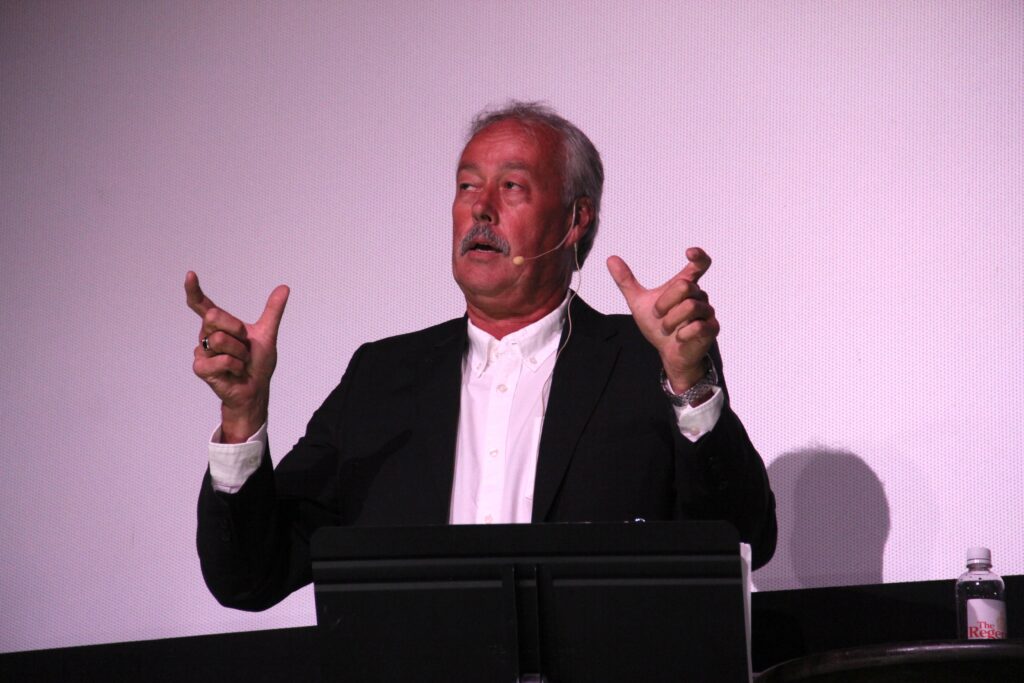
Mr. Shortt is the least ready to spend the money on new infrastructure. Sticking with his moratorium on large development, he said it would be irresponsible to put the County into further debt.
At the close of the evening, Mr. Nieman championed his plan to bring small industry to the County, but Mr. Shortt was not hearing it.
“Ever since 2000, we’ve been trying to get small industry here,” he said. “The proximity to the 401 is the issue. Belleville, Trenton, Napanee, they all have thriving industrial sectors. But Picton is 45 minutes from the 401. The industry we need to focus on is tourism,” he said.
But Mr. Nieman was ready. “First of all, Picton is 20 minutes from the 401,” he began. “And the County is not just Picton.
“It’s Carrying Place, Sophiasburgh, Rossmore. Carrying Place is 10 minutes from the 401. A good leader brings people on board.”
See it in the newspaper