Canada’s oldest weekly newspaper
© 2026 The Picton Gazette
Since 1830


 15° Cloudy
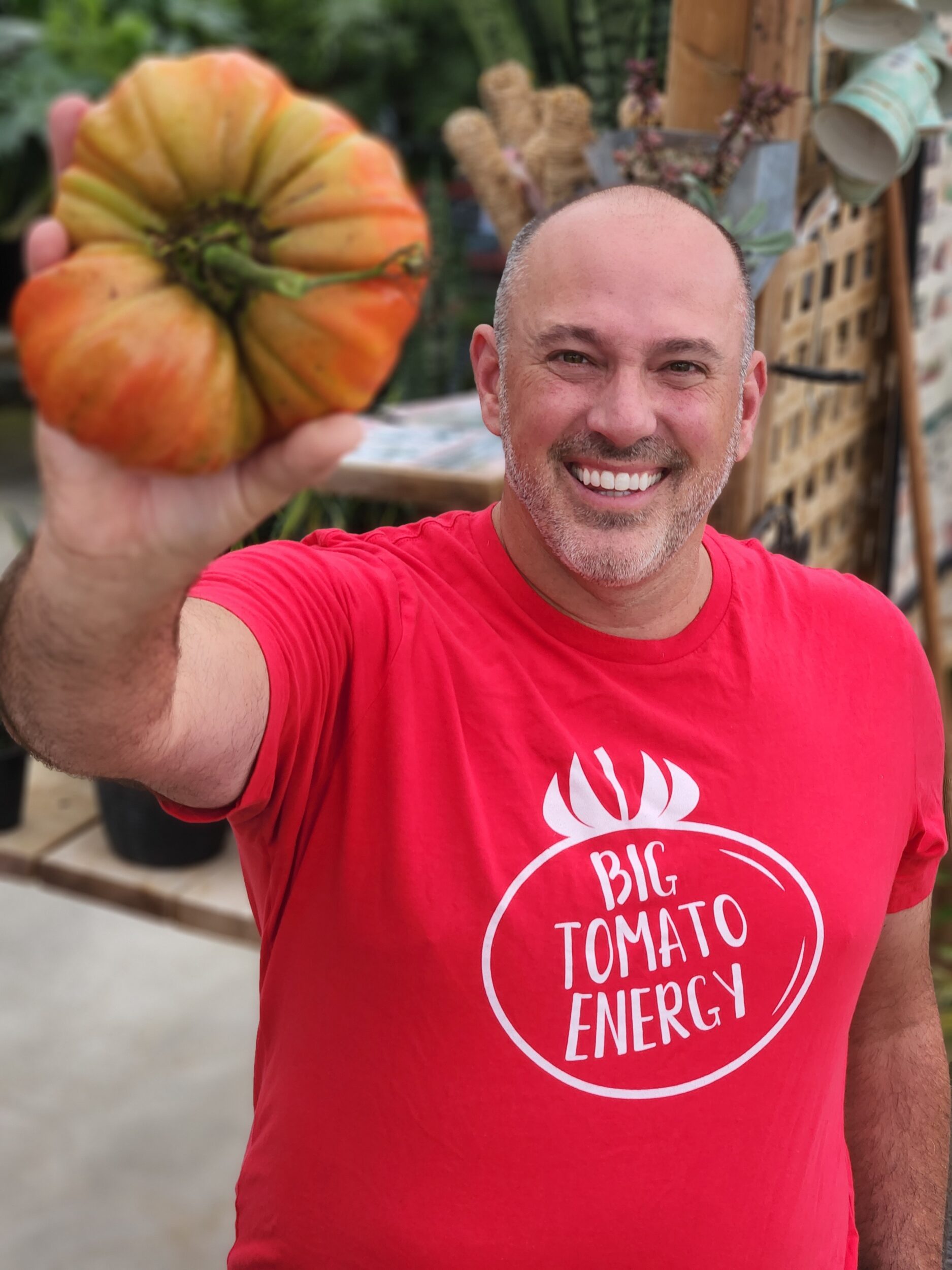 Carson Arthur (Supplied Photo)
When Carson Arthur was growing up on an apple farm, what his family ate through the winter depended on what they grew in the summer.
It’s a lesson he learned the hard way one year when his mother fell ill and he took over the garden. He could grow nothing but the rutabaga. To this day he has trouble seeing it on a Thanksgiving spread.
Mr. Arthur shared the anecdote, less as a cautionary tale, and more as a reminder that in our age of supply chain disruptions, trade wars, and soaring prices, we can no longer count on super-abundant global produce in grocery stores.
We need to get back to the garden.
A landscape architect and former HGTV personality, Mr. Arthur has travelled the country to talk about food sustainability, hosts a weekly radio show on gardening, and founded Carson’s Garden Market in Wellington.
His talk, “Feeding Our Community,” responds to the growing food insecurity crisis. Mr. Carson has delivered it 27 times in just six months.
He stopped to share it at a meeting of the County Garden Club at Rotary Hall in April.
In the County, “one in three families struggle with food insecurity,” Mr. Arthur said. “Middle and lower income families spend 30 percent of their income on food.”
Since the pandemic, fresh food prices have gone up by a third, and are expected to increase still further this year to a 50 percent increase over 2020. “It’s not going to go down in our lifetimes,” he warns.
All the while, Canada produces 80 percent of the processed food we consume, while importing 75 percent of our fruit and 50 percent of our vegetables.
“We’re an agricultural community,” he said. “Why are we bringing all this in?”
“Our farmers can’t compete with the machine that is the US,” Mr. Arthur adds, noting that Canada imported $28.3 billion in food from the US last year.
Back on the family farm, Mr. Arthur’s father finds it more lucrative to turn his apples into juice than to compete with the same varieties of US apples lining the grocery shelves.
Supporting Canadian farmers requires long-term planning, policy coordination, and investment, but there are steps people can take to contribute to local food security immediately.
Mr. Arthur implored the room of gardeners to start planting or increasing their rows of vegetables to share with people who are struggling to afford fresh food. He likened the moment to the campaign to grow victory gardens during the second world war.
“We are right back to needing to grow food for our community,” he said. “Instead of putting in flowers, try to plant more food to share with the food banks.”
“Plant an extra row of carrots,” he said. “Put a tomato plant in a bucket, I don’t care, just grow food.”
Beyond just growing food, Mr. Arthur wants people to make it last by returning to traditional household practices like canning, preserving, and freezing for the winter.
“We’ve been trained to buy just enough for the week or two weeks,” he said.
Food banks in the County are ramping up to accept more fresh food. Free vegetable stands and community gardens are also ways to make food accessible.
“If we don’t do this, I don’t know what’s going to happen to the middle and lower income.”
See it in the newspaper