Canada’s oldest weekly newspaper
© 2026 The Picton Gazette
Since 1830


 3° Cloudy
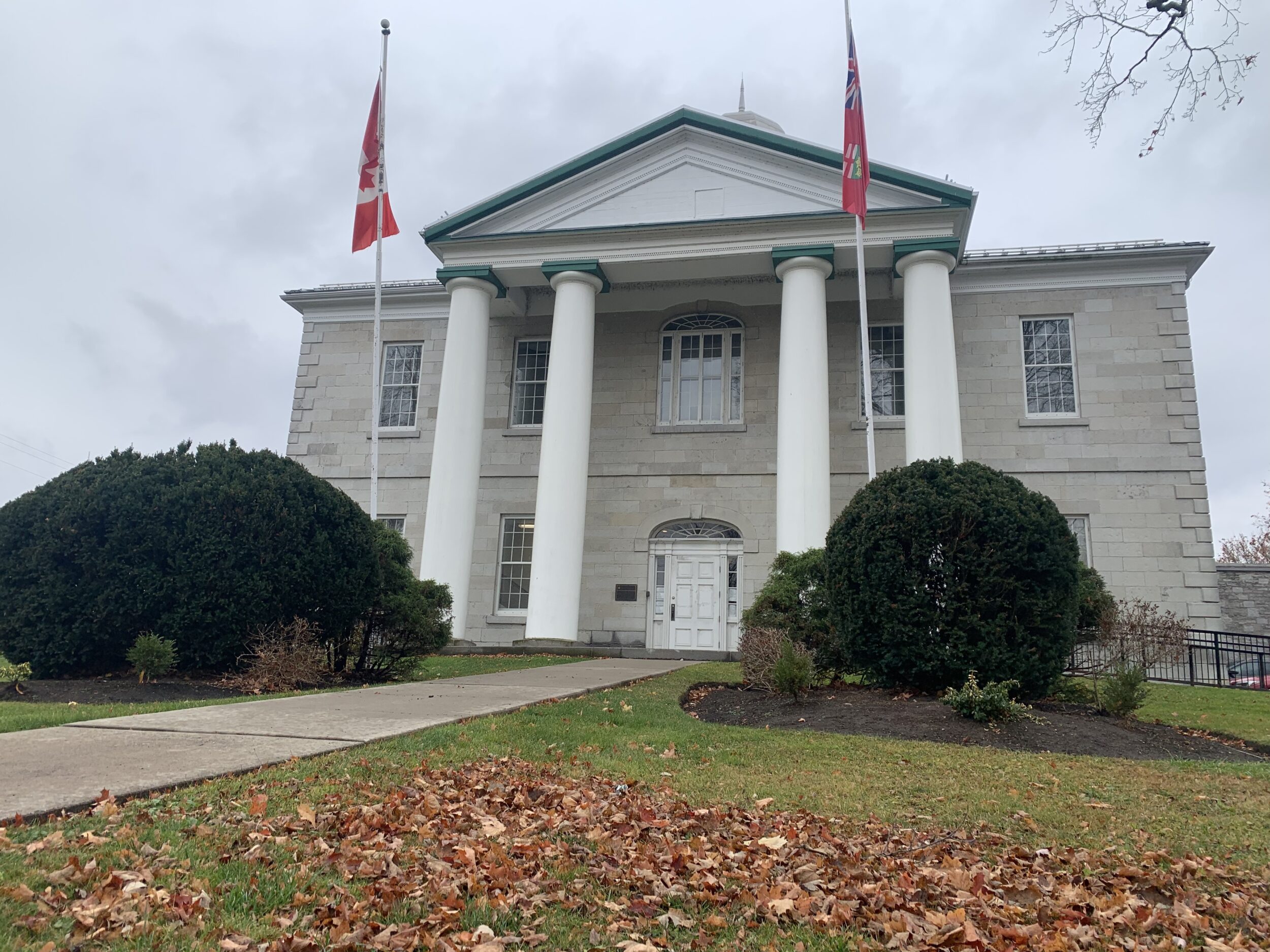
The Waring’s Creek Improvement Association (WCIA) is asking residents to help fund a legal challenge against the municipality and the Cold Creek subdivision by Port Picton Homes.
The WCIA has long argued that development threatens a watershed it has spent more than three decades working to protect.
A letter circulated ahead of an October 24 fundraising dinner at The Waring House said the Association needed to raise $70,000 for legal fees. It also noted the County was served with a lawsuit in February 2026.
The suit challenged the legality of council’s approval of the subdivision under the Planning Act, and sought to quash Council’s approval of Cold Creek’s draft plan of subdivision.
But on July 7, a judge issued a ruling which questioned the merits of the WCIA’s case.
It is not clear if the latest fundraising appeal is to launch a new case, or to pay for the first one. On October 29, the judge ruled that the WCIA must pay over half of the amount Port Picton Homes spent to defend itself against the suit.
The WCIA’s Dr. Cliff Rice did not respond to a request for comment on the fundraising.
After much wrangling, the County approved the Cold Creek subdivision in February 2025, reversing course on an earlier refusal — one the developer appealed to the Ontario Land Tribunal.
Council, worried it would lose the appeal at the Tribunal while incurring large legal expenses, negotiated an approval of the subdivision, one that incorporated measures meant to address the concerns of the WCIA.
A year later, however, the WCIA brought its suit. It sought to quash the approval bylaws, noting, correctly, that Council was not empowered to make a decision while the developer’s appeal was still with the OLT.
Port Picton Homes CEO David Cleave only withdrew his OLT appeal months after Council approved his subdivision application. It was on these grounds that the WCIA launched its suit, claiming Council did not have jurisdiction when it voted to approve.
But a July 7 decision by Justice M. Labrosse of the Ontario Superior Court dismissed the case.
In a ruling on the WCIA’s motion to transfer its application from the Divisional Court to the Superior Court, where it had been filed by accident, the judge found that even if Council had approved the subdivision at the wrong time, finding in favour of the WCIA’s suit would mean only that Council would re-hear the application and re-approve the subdivision.
The Justice noted that the WCIA suit was “procedural rather than substantive.”
“This application lacks merit because the illegality is purely procedural in nature. There is no substantive illegality to the by-laws adopted by the County, and as such, I exercise my discretion to deny the transfer request.”
The Justice further noted, in closing, “The matter has already gone through the public consultation process, and Waring’s has been heard, and its concerns have been addressed. It continues to be open to Waring’s to lobby County Council if the subdivision conditions are not properly implemented. There is no purpose served by requiring the approval process to be undertaken a second time when there is no evidence that the outcome could possibly be any different.”
Founded in 1993, the WCIA began as a group of watershed landowners and volunteers concerned about the health of a stream where brook trout had historically spawned. In a July interview with the Gazette, founder Dr. Rice described how members worked with scientists to study groundwater, stream flows, water temperatures, fish and insect life.
Volunteers also spent years restoring degraded stream banks through bioengineering. Dr. Rice recalled bundling discarded Christmas trees and securing them in the creek to redirect water, collect sediment, and encourage vegetation to take hold.
That work entailed significant financial investment. Dr. Rice said “hundreds of thousands of dollars were spent trying to defend” the creek.
The WCIA’s relationship with the County has included an earlier dispute over municipal infrastructure in the watershed. In 2006, the County completed an environmental assessment for a proposed sanitary sewer and water main extension to service future development in Picton’s urban area. Because the proposed infrastructure was within the Waring’s Creek watershed, the association raised concerns with the Ministry of the Environment and requested further review.
The dispute resulted in the 2008 Minutes of Settlement between the County and the WCIA. Under the agreement, the County committed to mapping the watershed and developing policies to conserve and manage its natural heritage resources. It also agreed to identify Waring’s Creek and its tributaries as a cold-water watercourse and establish policies for a 30-metre buffer along the creek.
The association maintains that those commitments were not adequately respected in the planning process for the Cold Creek subdivision, although negotiations did result in 50-metre buffers along the creek and regular, required hydrogeological testing of groundwater.
The association’s concerns centre on the potential effects of development on groundwater and the creek. In July, Dr. Rice raised concerns about the effects of roads, hard surfaces and stormwater runoff on groundwater recharge and water quality. “All the groundwater, all the water in this creek is groundwater,” he says.
The Cold Creek case prompted Council to examine how the application moved through the municipal planning process. It voted 12-1 to direct CAO Adam Goheen to prepare a chronology of the file and recommend improvements for future complex planning applications.
Dr. Rice said the WCIA is prepared to take part in the review process. “We’re quite happy to cooperate with that,” he said. But the association’s willingness to participate comes alongside a sense of frustration over how its concerns have been received.
“We feel dismissed and totally disrespected.”
See it in the newspaper