Canada’s oldest weekly newspaper
© 2026 The Picton Gazette
Since 1830


 24° Mostly Cloudy
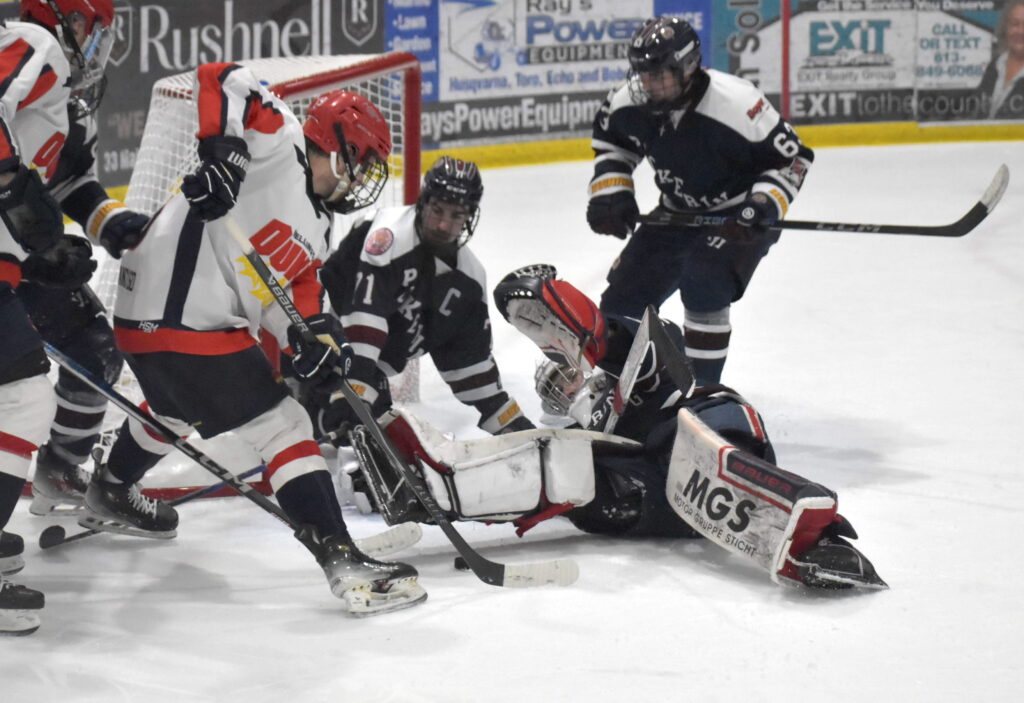
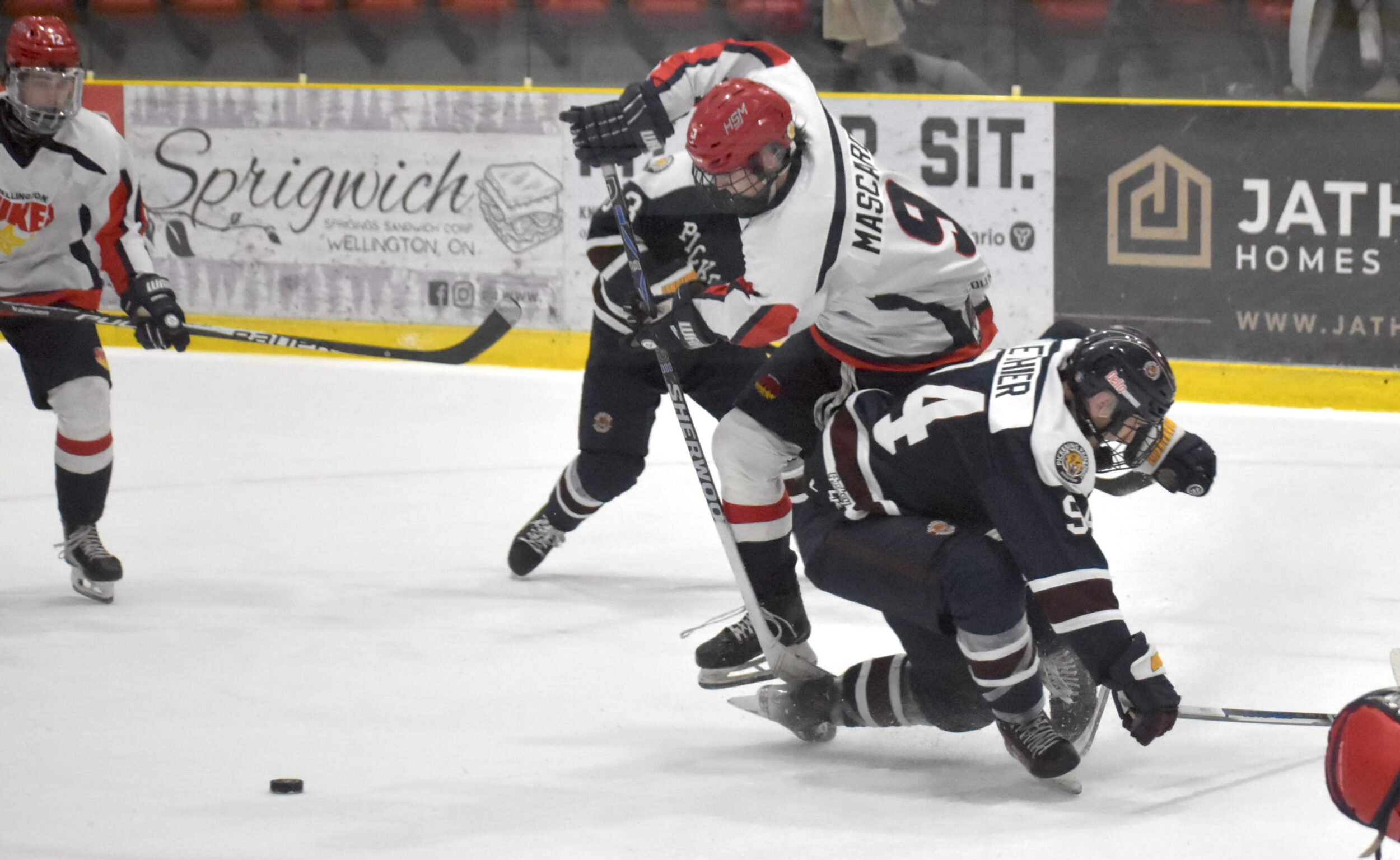 Zach Mascard and the Wellington Dukes were knocked down by Sam Ethier and the Pickering Panthers in four games. (Jason Parks/Gazette Staff)
The post season came and went rapidly for the Wellington Dukes.
The Pickering Panthers made short work of the locals in the opening round of the 2026 Buckland Cup finals, sweeping up Wellington in four games. Each contest had its tipping point where Wellington was within a shot of getting back into the series.
Even in Game 4, down a pair of goals into the third period, Wellington was within a missed penalty shot and clean breakaway from evening the score and forcing overtime.
But in each game, the Panthers found a way to wrest momentum away from Wellington. Four times in the series, not including empty net goals, the Panthers scored inside the final two minutes of play of a period. For a series that only had a dozen periods in total, there’s a lot of momentum shift within that particular stat.
In human form, momentum came from Cats netminder Anthony Cirone. His goose egg in Game 4 was the cherry on top of the series for Pickering. Wellington played some of its best hockey in the final game but they couldn’t solve the Panthers’ goalie.
Dukes Caoch and General Manager Jacob Panetta said the Panthers had the answer for everything Wellington threw at them in the series. An older and more experienced side in the lineup and on the bench, Pickering demonstrated a well-seasoned hand.
“It’s always the little things in playoffs. (Mr. Cirone) came up with some key saves in key monents that, if we score, we can flip the script but we just couldn’t bury the puck,” Mr. Panetta confessed to the Gazette after the series finale.
Penalties also hurt Wellington during the series, especially the first two games. Pickering was 3 for 8 on the man advantage to start the series and although Wellington didn’t allow a power play goal after Game 2, they were shorthanded 19 times in Games 3 and 4.
“We preached discipline at the start of the series but we just couldn’t stay out of the penalty box,” the coach added. Wellington was a combined 3 for 17 with the man advantage.
But for every growing pain experienced in the spring of 2026, there’s reason to be optimistic for 2026-27. First off, as of this writing, Pickering has gone ahead of the second seeded Stoufville Spirit 2-0. What if the Panthers are the ones to stand at the top of the OJHL’s East Conference after the dust settles? Suddenly, four competitive games against the Cats doesn’t seem so lopsided if the competition is qualified.
Less than a handful of players will graduate from the Wellington lineup this summer. Most of then team could be back this fall, one year hungrier and one season better.
But what will the junior hockey landscape look like locally in August? Mr. Panetta shed some light on the situation. This season, he and assistant coach Darcy Murphy took control of the organizational reins while the team was put up for sale. On that front, nothing has changed. Organization owner Ken Clement is still looking for a local owner or ownership group to purchase the hockey club and keep it in Wellington.
Failing that scenario, Mr. Panetta and Mr. Murphy will return under the same agreement that was struck last summer- They operate the team, they pay the bills and keep the team out of the red while they wait for a local ownership option to materialize.
“We noticed at the mid-point of the season, especially around Christmas you could definitely feel that buzz back in the building and the positivity coming back. Murph and I felt as the season went on, we were able to rebuild a lot of the trust between the organization and the Prince Edward County community,” Mr. Panetta added.
Regarding the overall immediate and long term future of the club, Mr. Panetta said he and the staff are looking forward to next year. Wellington is recruiting hard both locally and regionally to fill the cupboards with prospects as in years past.
In the background, Mr. Panetta is eager to meet with potential local buyers or groups that want to be involved with the storied hockey organization.
“When we look at a few models around the OJ, the one in Collingwood with a consortium of owners is a model that could work here and it’s been very successful both hockey and business wise,” he added.
See it in the newspaper