Canada’s oldest weekly newspaper
© 2026 The Picton Gazette
Since 1830


 24° Mostly Cloudy
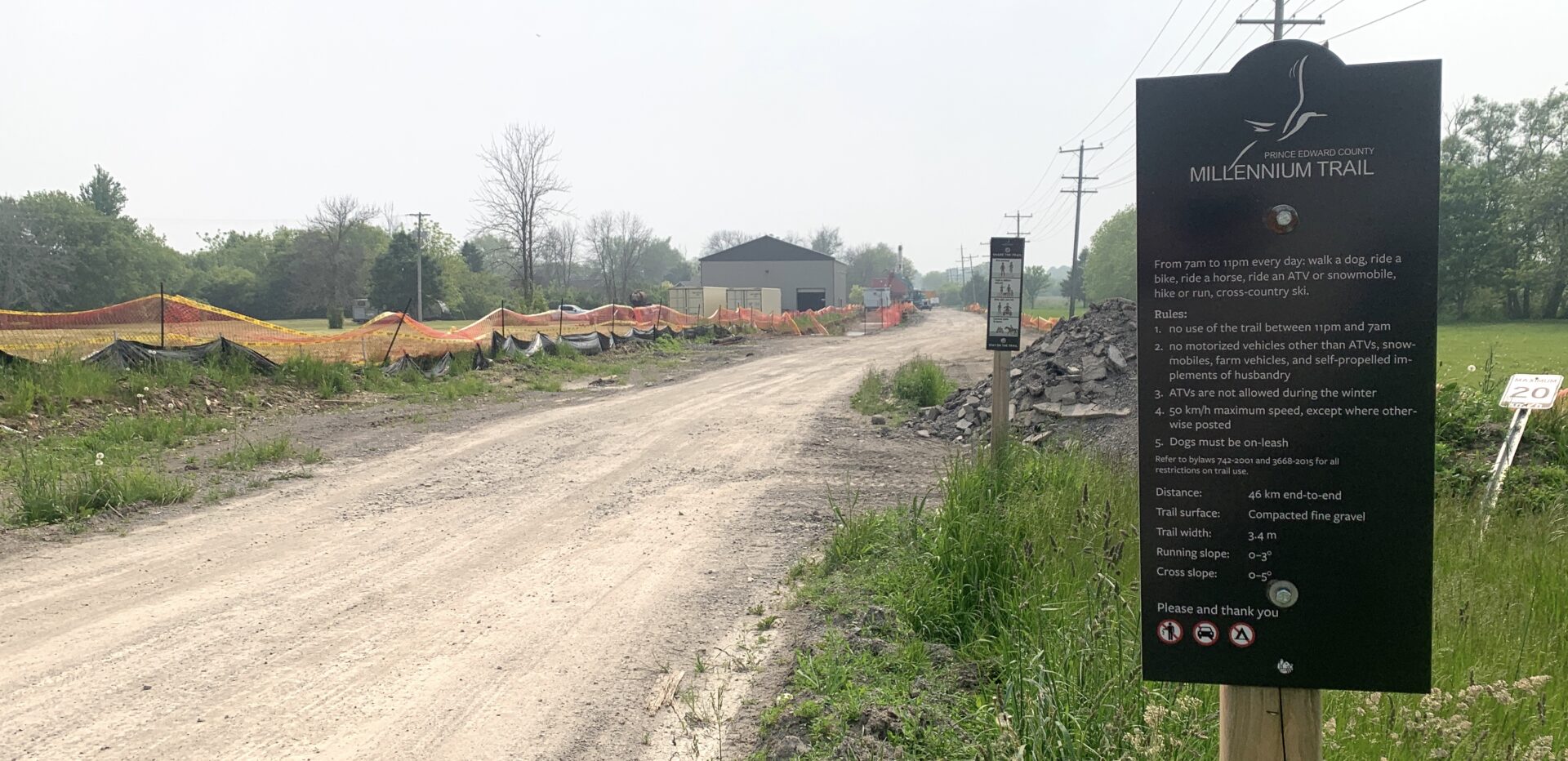 The project to install water and wastewater trunk lines along the Millennium Trail has been plagued by delays due to high ground water levels, buried steel railway lines and hard rock formations. (Jason Parks/Gazette Staff)
The County is looking for $5 million to complete the Wellington Trunk Main and Sanitary Pumping Station project.
And a new Manager of Engineering.
Hours after delivering a report at Shire Hall Tuesday evening that requested two, $2.5 million overage payments to complete the water infrastructure projects, Manager of Engineering David MacPherson was no longer employed by the County.
In an internal staffing announcement email obtained by the Gazette, Director of Development Services Cristal Laanstra told staff Wednesday afternoon Mr. MacPherson was no longer employed, effective immediately; in the interim, any questions should be directed to her office.
Spokesperson Mark Kerr confirmed Mr. MacPherson’s departure, but not whether it was related to his report to Council. “We cannot provide any further comment as it is a specific personnel matter,” he said.
Originally tendered for $16 million, the project to extend water and wastewater pipes along the Millennium Trail hit a number of snags. In his report, Mr. MacPherson said both projects encountered several unforeseen conditions that resulted in significant cost increases and schedule extensions.
A $6 million pumping station was added when it was discovered the sanitary sewer pipes couldn’t be buried deep enough to permit gravitational flow.
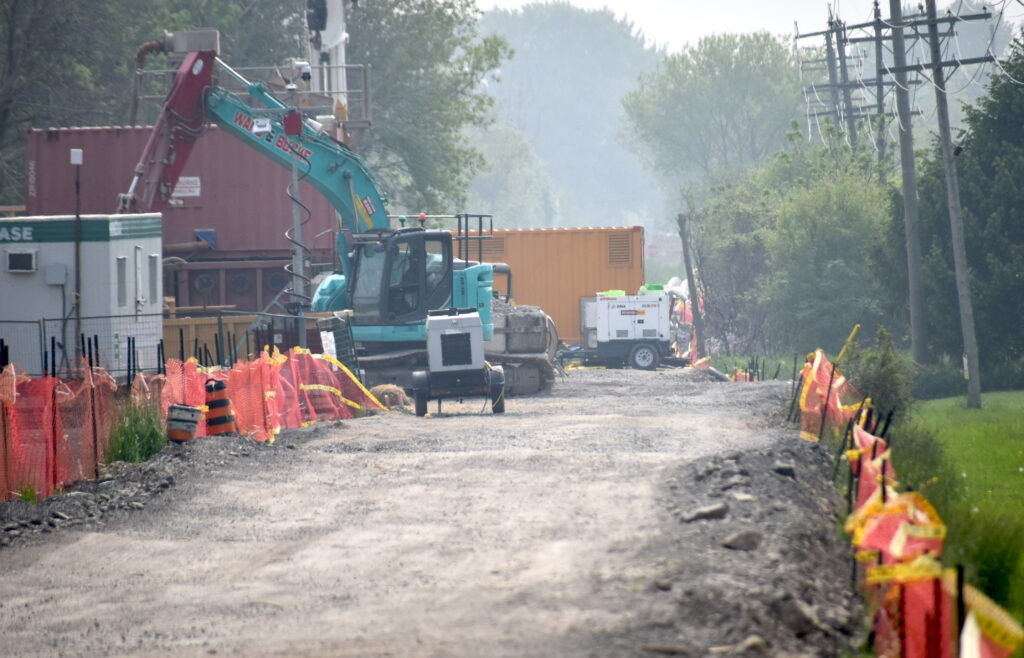
“These challenges included the encounter of hardened rail steel components during trenchless boring operations beneath Lane Creek, as well as substantially higher groundwater infiltration rates than anticipated,” Mr. MacPherson wrote.
“The groundwater conditions encountered along the Millennium Trail and within the Sanitary Pumping Station excavation required enhanced dewatering measures, additional permitting through the Environmental Activity and Sector Registry (EASR) process, revised construction sequencing, and extended construction durations.”
Based on current capital financing projections, approximately $3.2 of the $5 million can be accommodated by lower-than-anticipated borrowing requirements on Phase 2 of the Picton Main Street project. But the municipality still needs to make up $1.8 million.
Both the drinking water and sanitary sewer projects included $1 million contingency envelopes in their budgets. Councillor Pennell took these into account alongside the delays and the overage requests.
“It scares me half to death that a project could be bungled up so badly and I believe there should be a full investigation,” he said.
Councillor John Hirsch wondered about the accuracy of the pre-construction engineering studies. Hydrogeological reports on ground water and deep bore holes should have offered some warning about underground rock formations.
“I’ll leave the steel out of it, because I’ll grant you that finding old rails down there wasn’t probably in anybody’s mind,” he said. “But the rest of it is pure engineering. I’d like to know if the consulting engineers did their job properly?”
Mr. MacPherson noted that the design-stage hydrogeological assessment anticipated dewatering requirements of approximately 20 m³/day during construction. But actual groundwater infiltration rates encountered during trenching operations starting in November 2025 ranged between 2,800 and 3,500 m³/day.
“These groundwater volumes were well beyond those anticipated during the design phase and had a substantial impact on both project costs and construction timelines,” he noted.
“Dealing with 20 cubic metres of water is vastly different than 3,000 to 4,000 cubic metres.”
Councillor Chris Braney said the project had turned into a “gong show,” and that residents were concerned their great grandchildren would be paying for it.
“A $5 million overage is huge,” he said.
But Mr. MacPherson said that the old steel rail lines and excess groundwater encountered during excavation of the pumping station could have been managed with the original contingency funds.
It was the excessive groundwater infiltration last fall that initiated a cascading effect of delays, work stoppages, and contract adjustments. Blasting the rock trench along the Trail, for example, was interrupted by the influx of groundwater.
Then denser-than-expected rock formations, and the old CNR rails buried deep under the trail combined to create a contractor traffic jam among those in charge of the water piping, the sanitary sewer lines, and the pumping station project.
“So that’s where it became a series of cascading issues and problems,” Mr. MacPherson said.
The project is expected to be completed sometime in the next quarter.
See it in the newspaper