Canada’s oldest weekly newspaper
© 2026 The Picton Gazette
Since 1830


 12° Cloudy
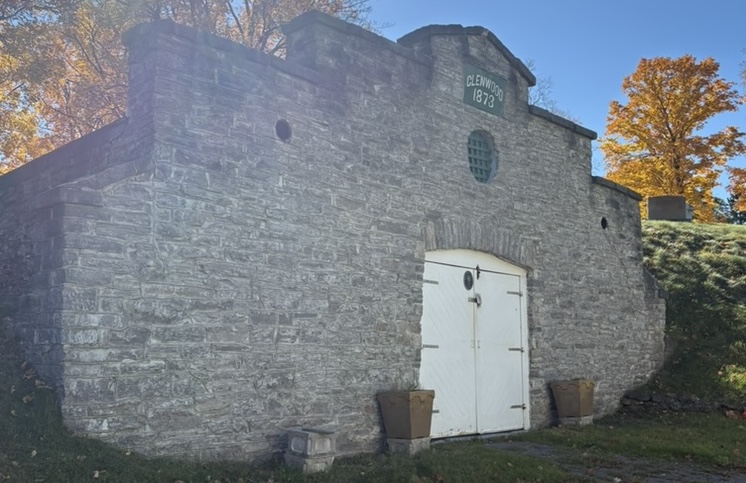 The Receiving Vault at Glenwood Cemetery (Brittiny Blodgett / Gazette Staff)
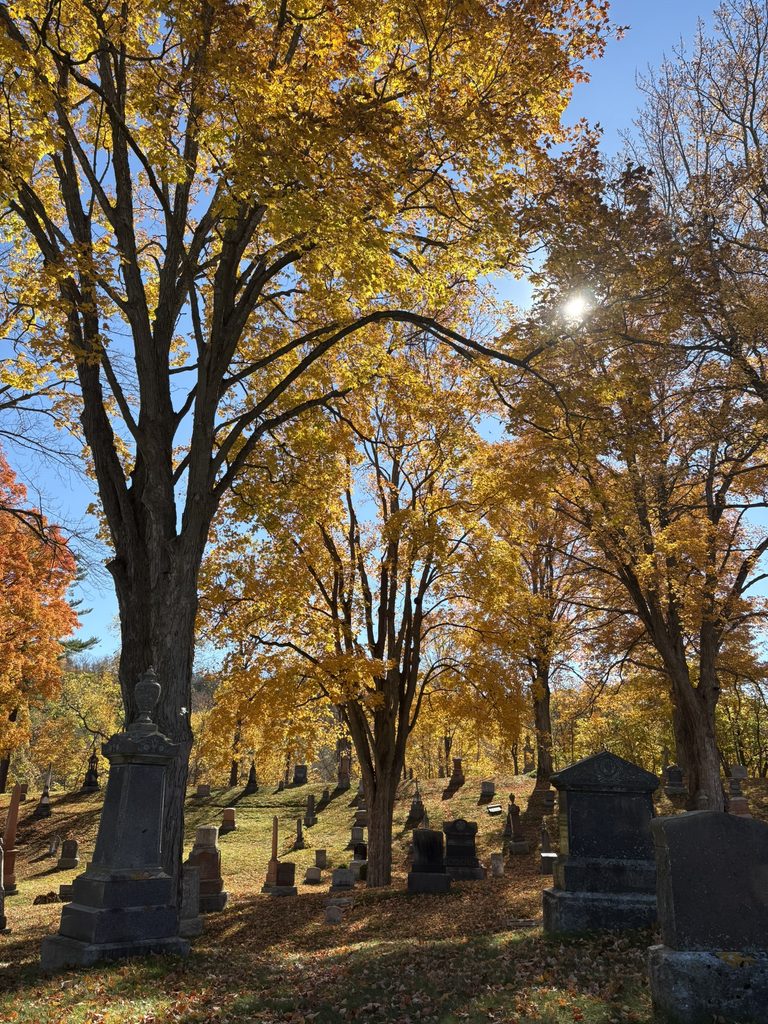
Beneath the trees and among the weathered monuments of Glenwood Cemetery, Picton’s history is written in stone.
Family names etched into headstones recall the County’s ancestry, while the monuments of prominent figures and the stained-glass windows inside the historic chapel offer glimpses of the community’s past.
The cemetery’s grandeur lies not only in its monuments, but in the landscape that surrounds them. Rolling hills, winding roads, and mature trees create the feeling of a secluded park, where generations of residents rest beneath a canopy of green. Deer move through the grounds, fish inhabit the ponds, and birds pass through in spring and fall.
“When I come through the gates, I don’t have any blood pressure problems,” says Sandy Latchford, who chairs the cemetery’s volunteer board. “It’s just soothing.”
She describes it as “a magical place.”
In its early years, Glenwood was more than a burial ground. It was a destination for Sunday visits, picnics and social gatherings. Families arrived in their finest clothing.
“Women dressed in Victorian blouses, white skirts and large caps.”
The image paints a picture of a time when a cemetery visit could be a social occasion, as well as an act of remembrance.
Some of Glenwood’s older monuments arrived from elsewhere. A row of headstones was moved there after the United Church decided to pave over its former burial ground.
One monument commemorates a woman who died of cholera in 1832 after just 22 hours of illness. Its lengthy inscription remembers her devotion to caring for the sick and offering comfort to others.
“You read it and think, this was their Mother Theresa,” Ms. Latchford said.
Other headstones display carved weeping willows.
“They’re a sign of sorrow,” according to local historian Peter Lockyer.
One of Glenwood’s most memorable statues was erected in 1926 for Ruth Guest. Ruth and her brother, Azel, used to play in the cemetery. She had admired a marble angel and told her brother that she wanted one. He explained that people only received such things when they died.
Ruth was six years old when whe was struck by a motor vehicle during a family outing just weeks later. Her family had an angel placed on her grave.
In 2018, Ruth’s angel was among the monuments attacked by vandals. They damaged nearly 200 headstones, foundations, and other cemetery features. The angel is now with the family, but its story remains part of Glenwood’s history: a child’s fascination with a monument transformed into a family’s memorial to a life cut short.
Glenwood also holds the graves of people whose impact was widespread.
Letitia Youmans (1827 to 1896) was a teacher and a leading figure in Canada’s temperance movement. She helped establish the Ontario chapter of the Women’s Christian Temperance Union and served as its first president.
Wellington Boulter, known as a father of the canning industry, helped to establish Picton’s place in the County’s agricultural and commercial history. He built an early canning factory in Demorestville and served two terms as Picton’s mayor.
William Johnson, a United Empire Loyalist and veteran of the War of 1812, represents an earlier chapter in the settlement of the County.
Some resting sites lead into darker and more troubling corners of local history.
In a wooded area near the boundary between Glenwood and the Catholic cemetery of Mount Olivet is a grave believed to belong to George Lowder, a 24-year-old bricklayer. He was convicted of robbery and murder and hanged in Picton in 1884.
“We’ve discovered people we didn’t know we had,” notes Mr. Lockyer. “There’s a narrow band of wood that separates this Protestant cemetery from the Catholic cemetery. No man’s land. That’s where George Lowder is buried. Both men convicted of the crime left letters maintaining their innocence, and the case is clouded with doubts about whether the right men were convicted.
Near a tree stands a propeller blade beside the graves of six airmen who died in training crashes during the war years. The marker is a remarkable tribute to lives lost before they had the chance to begin in earnest.
Glenwood’s Victorian character is also reflected in its 1901 stone chapel. With its steep gables and arched windows, the small Gothic Revival building has a storybook quality. Inside, specially made stained-glass windows feature symbols associated with Masons and the Odd Fellows. Rather than traditional religious imagery, the windows communicate the beliefs and values of the groups that donated them.
“These windows speak to you,” Mr. Lockyer says. “But you have to know the code to know what they’re saying.” At the moment, that is difficult, as the precious panes are in storage and the Chapel’s future in doubt. It sits in a low, sandy spot, and water is seeping into its walls, weakening the lime mortar and timber supports holding it together. Repair, estimated at at least $1 million, involves a whole new foundation.
Mr. Lockyer, who has spent years leading walking tours dedicated to discovering the past, sees Glenwood as a place whose importance lies as much in its natural setting as in its historical record.
“It’s spectacular as an urban parkland and forest, not just as a cemetery,” he said.
“We owe it to the people who went before who have been buried at places like Glenwood to respect the past and make sure that it’s preserved for the future,” Mr. Lockyer said.
Glenwood invites people to wander its winding roads, pause at its monuments and discover the lives behind the stones. It is a place of reverence.
“If we have people just enjoying the space, then we don’t have to worry about the others,” notes Ms. Latchford.
See it in the newspaper