Canada’s oldest weekly newspaper
© 2026 The Picton Gazette
Since 1830


 -3° Sunny
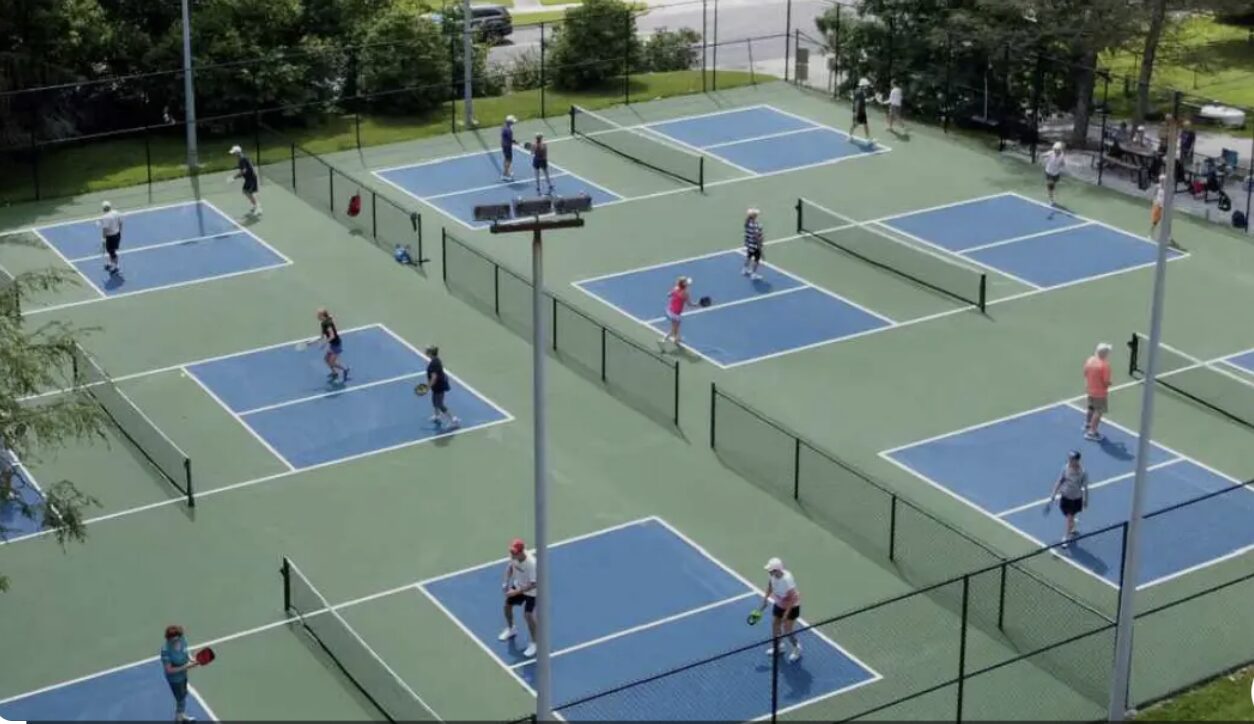 16 pickleball courts were approved for Bonneworth Park in Peterborough in April after a series of highly contentious meetings of Council. Residents complained of a lack of consultation. (Global News image).
Six new Pickleball Courts slated for Delhi Park have ignited a conversation around what the park means to the community, and how to shape its future.
Council designated the pickleball courts a Project of Community Interest in 2022, and approved Delhi Park as their location in 2024.
For Prince Edward Pickleball Chair Stephanie Roth, Delhi is the ideal location, offering players access to and from downtown Picton while making use of an out-of-commission baseball diamond.
“We looked at all viable County-owned properties, and Delhi was the only one to meet the full set of requirements, including accessibility and the infrastructure needed for courts,” she said.
Prince Edward Pickleball has raised $164,000 for the build, from a mix of grants, donors, tournaments and events. “Our community support has been incredible,” Ms. Roth said. The amount required for the new courts is at least $200,000.
Pickleballers are a fast-growing community. Ms. Roth noted that when the recreation committee first started offering pickleball, there were roughly 30 players. Now there are over 300.
“We’re seeing new players of all ages join constantly,” she said, adding that a 92-year old and a 22-year old recently went head-to-head.
There are pickleball groups in Picton, Wellington, Waupoos, Bloomfield, and North Marysburgh. A single tennis court can accommodate four pickleball courts.
Yet in the years since Council approved the courts, the 31-acre park has seen a groundswell of attention as a venue of great cultural significance, with beautiful natural assets, and a central location.
Delhi connects downtown Picton to Macaulay Village, and adjoins the Mount Olivet and Glenwood cemeteries. Historic uses range from a portage site to a rat-infested dump.
“It was a bucolic rivercourse and marsh, then it was reclaimed for industry and buildings, then it became a dump, and then, in 1984, it became a park,” said Liz Driver, President of Prince Edward Heritage Conservancy.
Since the pickleball courts were approved, Delhi Park has been listed as a high-priority cultural heritage landscape in the new Cultural Heritage Master Plan, finalized earlier this year.
In 2024, Council initiated the Delhi Park Community Connections Active Transportation Plan, and contracted landscape architect Victoria Taylor to support the work. After community consultations, the plan proposes a series of new entrances and pathways to connect Picton Main Street to Macaulay Village.
“All these things happened after the pickleball courts motions,” said Ms. Taylor. “We’re obligated to take a step back and slow down and think about what this landscape means for all of us.”
On Earth Day this year, the County’s Director of Recreation and Community Facilities, Lisa Lindsay, facilitated a community-initiated meeting on plans and priorities for Delhi.
“The fact that a number of different groups came out for the community conversation that took place shows the interest,” said Ms. Driver. “It’s just a way of recognizing how special Delhi Park is.”
Ms. Driver suggests there needs to be a master plan for Delhi Park that encompasses its cultural heritage and creates a roadmap for future use. A master plan was developed for the Picton Fairgrounds following competition for space.
“The Prince Edward Heritage Conservancy is going to be advocating that Delhi Park become a kind of pilot project for evaluating it as a cultural heritage landscape,” Ms. Driver said.
She notes that Council approved the pickleball courts the same year they approved the Cultural Heritage Master Plan.
“To me it signalled that we’re beginning to see that everything is connected and we have to have a big view and a long term view of what we want to protect and how we want to shape these special places.”
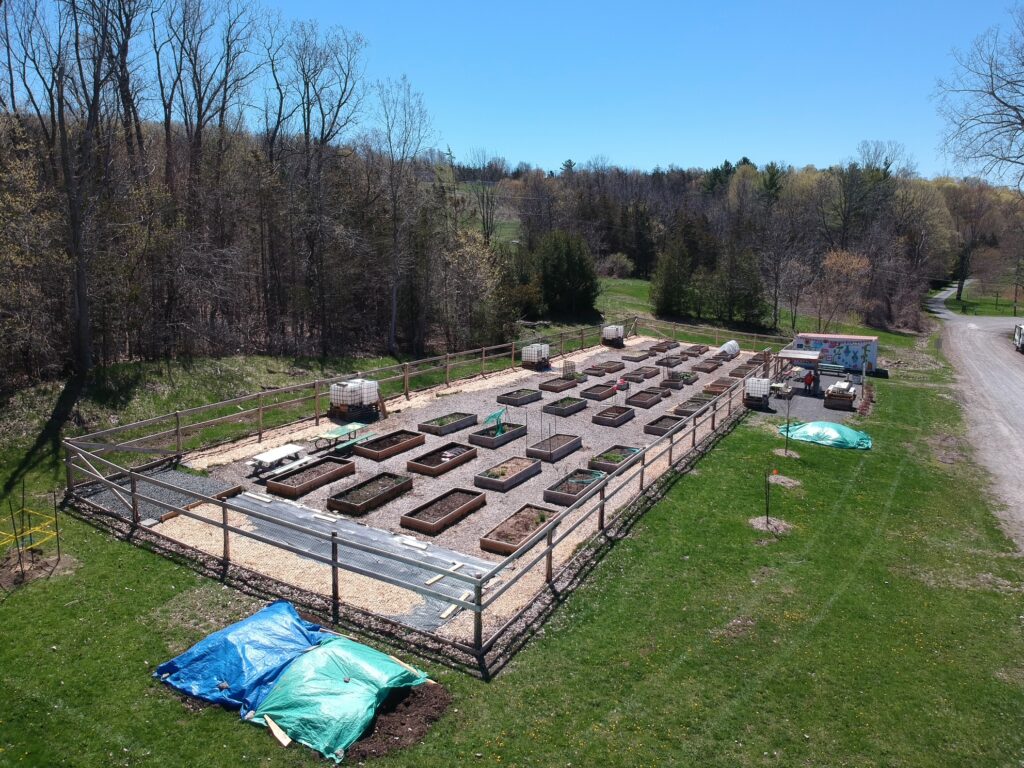
One concern is noise. Prince Edward Community Gardens members value the quiet serenity of Delhi in its present state.
34 gardeners tend 50 garden beds in Delhi, four of which produce fresh vegetables for the Picton United Church Food Bank.
“Our garden has had a real renaissance over the past three years,” says President Max Souliere. “It’s been amazing.”
“And one of the hallmarks of that, what we are trying to build, is a place of tranquility for gardeners and for people using the park.”
Still, he acknowledges that, like the gardens, pickleball offers a chance to build community. He welcomes conversation around the shared space.
“What we want to do is, at the appropriate time, get together with them on a group-to-group basis and say, here are our needs, our wants, here’s where we fit in, how can we coexist?”
County staff have just received preliminary design plans for the courts. As the plans go through the detailed design process, Ms. Lindsay confirmed both noise and lighting will be evaluated.
Ms. Roth said that community input on the plans is not taken lightly. She explained that while fundraising is driven by Prince Edward Pickleball, all the oversight and studies are driven by the County.
“We understand the concern but this project actually aligns quite well with the park. The courts would go on an unused baseball diamond, historically a landfill,” said Ms. Roth.
“This is about revitalizing an underused space.”
Ed Note: This story has been updated to correct two inaccuracies. First, no plans for the pickleball courts have yet been seen or approved by either Quinte Conservation or the Ministry of the Environment, Climate Change and Parks. Second, the landscape architect Victoria Taylor was hired by the municipality to support the Delhi Park Community Connections Active Transportation Plan, which was initiated and is led by the municipality. The Gazette regrets the errors.
See it in the newspaper