Canada’s oldest weekly newspaper
© 2026 The Picton Gazette
Since 1830


 5° Mostly Cloudy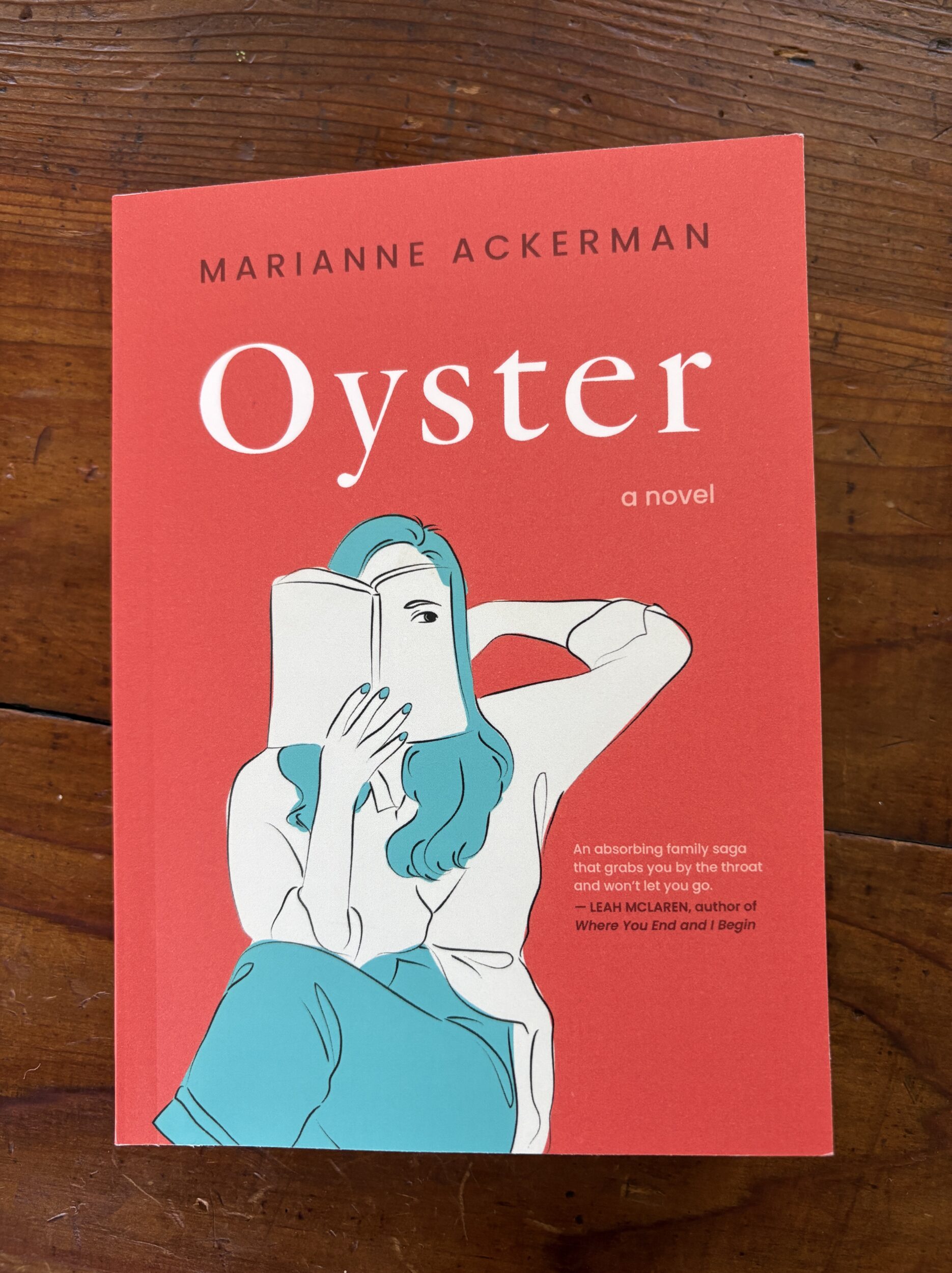
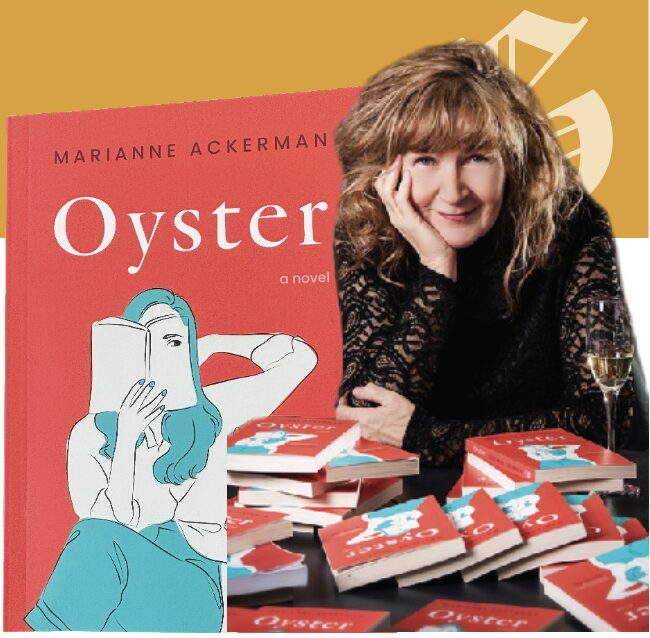
Although Marianne Ackerman’s County roots go back seven generations, she considers herself a “figurative transplant,” having established her career as a playwright and novelist in Montreal.
Oyster is her third novel, and her first about the County, if you don’t count her work as the Picton correspondent for the Kingston Whig-Standard when she was a teenager.
“I was born at Belleville General Hospital and taken home to Ameliasburgh,” she told a sold-out audience at the County Authors Festival, noting the line between born and raised tangles many County folk into knots.
The novel follows Amelia Cameron, a once famous novelist whose life is upended by the sudden death of her father. The event draws her back to the family farm and leads Amelia and her siblings to confront dynamics they have ignored in quiet, Catholic repose.
When her vivacious 22- year-old niece, Ginny, sidles up to her for writing advice, it is the beginning of a literary charade that collapses workaholic Amelia’s carefully constructed barrier between work and family, Toronto and the County.
As a narrator, Amelia has a delightful and earned reticence. After early success with a novel called Erosion, she has followed up with a body of work marked by artistic integrity and low sales.
Amelia is so dedicated to the plight of highbrow literary fiction that she dismisses her bestseller as trivial: “I did not believe it stacked up against the great novels of our time. A page turner, breathless momentum, but no depth, no theme or awareness of content.”
She casts this cool, caustic view onto the contemporary literary industry, from creative writing MFAs to the “story markets” that have replaced readers. She yawns at the mere mention of marketing.
Amelia, however, is not always to be trusted. Her observations, sometimes acute, are also patchy, not to mention judgy. The careful unveiling of her own blind spots gives the novel its emotional arc, as Amelia comes to read the people around her as something more than characters in books.
It is Ginny who first lures Amelia back into the land of the living by interrupting her life of solitude. Worldly, glamorous, and well read, Ginny holds court in conversation with Amelia’s agent and, refreshingly, defends the controversial French writer Michel Houellebecq.
With Ginny and Amelia, Ms. Ackerman said she wanted to explore a maternal relationship outside the mother-daughter paradigm.
“A mother-daughter relationship is constantly boiling,” she said. On the other hand, aunts and nieces are not scripted in the same way. They offer less volatility and more variety.
Amelia observes the County without any attachment to a particular idea of it. Even having grown up in it, she is unsentimental about the past. Her brother Dan tends to his vineyard and her brother Lance works to establish an upscale B&B, fully embracing the opportunities of the new County.
Ms. Ackerman recalled that when she was growing up, there was a sense of urgency to get out, and she did, living as far as Provence for a period of time.
In writing Oyster, however, she dove back into the County with a journalistic eye for authenticity and a playwright’s ear for dialogue.
At the start she wondered, “how much do I really know about the County?” She set about listening to and observing her family members, picking up on turns of phrase and behaviours that demonstrated regional distinction.
She observes that the battle over the identity of the County is multi-faceted. Far from just being “an influx of people from Toronto with fancy clothes,” the County is attracting new Canadians, and young people wanting to make a home where they grew up.
“Those are going to become part of the things you brag about,” she said.
For Ms. Ackerman, accepting the multiplicity of stories unfolding in the County today is also a way of questioning received narratives of the way things were.
“There are other Counties than the one I grew up in.”
See it in the newspaper