Canada’s oldest weekly newspaper
© 2026 The Picton Gazette
Since 1830


 24° Mostly Cloudy
 Consultants find too many plans, not enough funds
The municipality is attempting to be all things to all residents — but needs the long-term revenue streams to sustainably accomplish its goals.
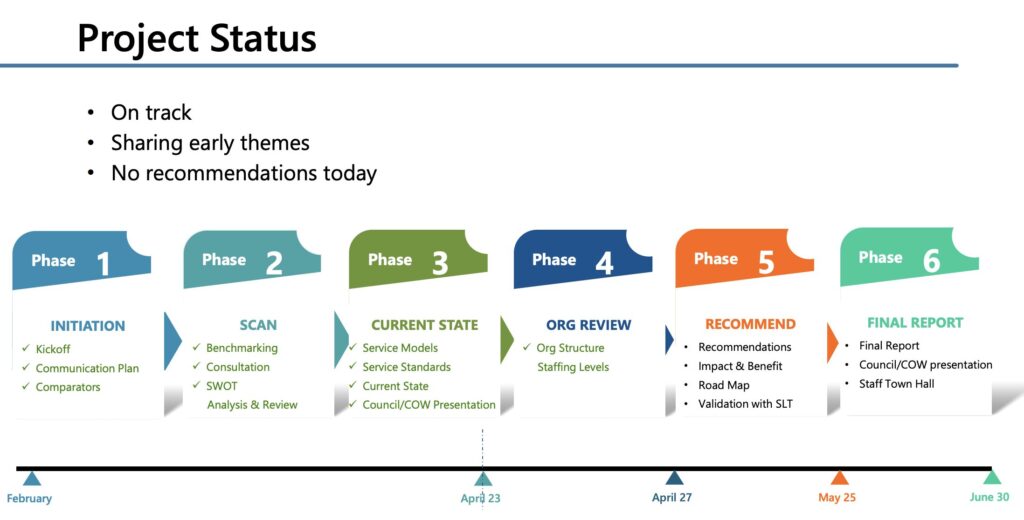
That was the message delivered to council by Andrea Clemencio and Lena Dianda of Municipal VU Consulting after a $67,000 Service Delivery and Organizational Review.
Municipal VU’s final report and recommendation roadmap will be presented to Council at the end of June. They gave an interim presentation to Council in April.
Ms. Dianda noted that, like a number of Ontario municipalities, the County is under increasing pressure. Service expectations are rising, while costs and complexity are increasing.
“This is a planned, proactive governance exercise, essentially the County is popping the hood and making sure that everything is in good shape so you can get where you need to go,” she explained.
In terms of positives, the consultants stressed municipal staff are committed to their work and to the community they serve.
“They deeply care about the work they do. This is not the case with the other municipalities we work with,” Ms. Clemencio said. “It’s a great foundation to start with. Your employees care about the services they provide, they care about the community, and they care about each other.”
On the other hand, the consultants suggested the municipality is misaligned in terms of what it should and shouldn’t be offering. Some services and service levels are reactionary measures, offered in response to local pressure and not always guided by strategic planning.
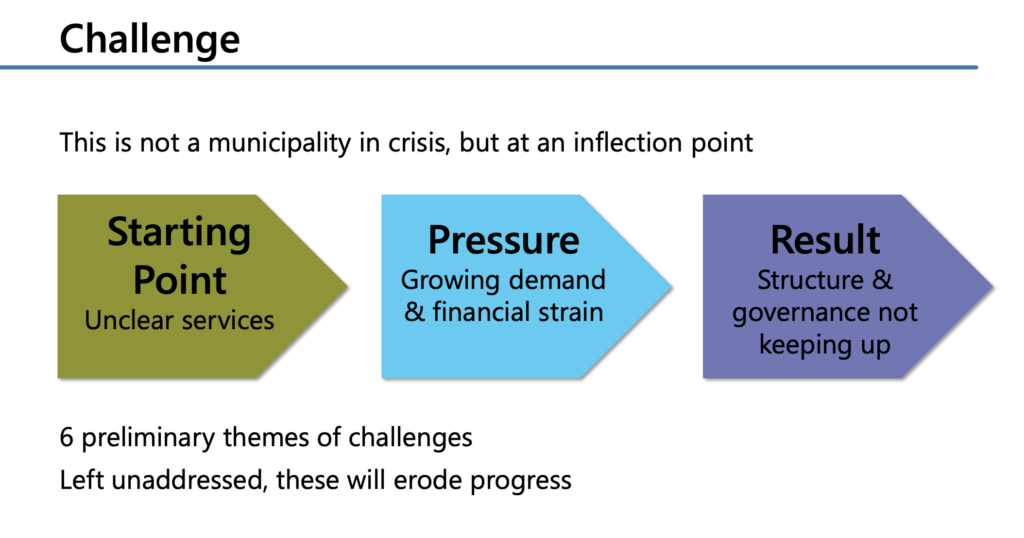
“We use the term ‘Service Creep’. You have started to take on more, commit to more, do more for the community, but without the resources needed to deliver service sustainably at that level over the long term,” Ms. Clemencio said.
The new, provincially mandated Asset Management Plan, long term infrastructure planning, and various master plans should align with the County’s strategic plan.
As a result of misalignment, the municipality is relying on debt, reserves, and external funding to meet obligations it should not have created.
For example, facing a high level of deteriorating infrastructure, Council has made priority decisions that mean important preventive maintenance and rehabilitation maintenance was deferred.
“The current tax levels aren’t sufficient to maintain the services you’re providing and the infrastructure and assets that you’re maintaining,” said Ms. Clemencio. “There’s an offset, there’s an imbalance there, and that’s the purpose of doing this kind of exercise so you can make informed decisions going forward.”
She added there are opportunities with additional revenue tools, including user fees, to bring in more money and create fully diversified revenue streams.
See it in the newspaper