Canada’s oldest weekly newspaper
© 2026 The Picton Gazette
Since 1830


 -3° Sunny
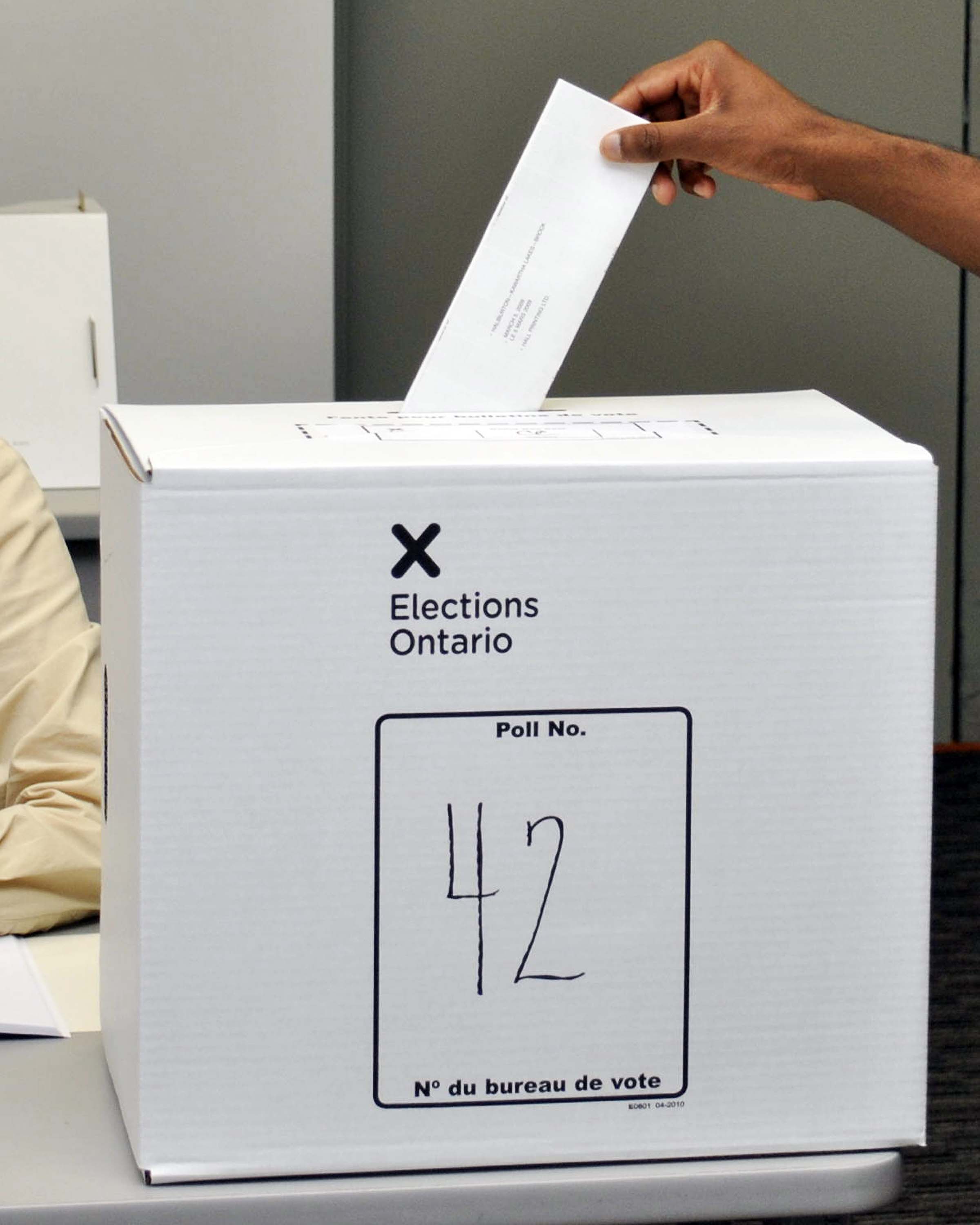 Municipal elections across the province October 27.
Resident Julia Swedak appealed the proposed Size of Council ballot question to Elections Ontario, which held a hearing at Shire Hall May 6.
At issue is the yes or no referendum question, “Are you in favour of a third-party review of Council size and related ward boundaries?” slated for the 2026 municipal election ballot.
Under Ontario’s Municipal Elections Act, any person may appeal the wording of a ballot question to the Chief Electoral Officer. Appeals must concern whether the question is clear, concise, and neutral, or cannot be answered with a simple “yes” or “no”.
Municipal lawyer James Ayres served as the Hearing Officer and noted at the start of the proceeding that Ms. Swedak was unable to attend. The Toronto-based barrister said Ms. Swedak’s absence was both irregular and unfortunate because he had several questions about her 12-page appeal submission.
“There are points in Ms. Swedak’s written appeal submission that fall outside of this tribunal’s purview and are not relevant to the focus of this hearing,” he said.
The Gazette attempted to reach Ms. Swedak to obtain a copy of the appeal submission but was unsuccessful.
Some of Ms. Swedak’s points of concern were revealed in submissions made by County solicitor Sarah Viau, who noted at the outset of her presentation that the ballot question satisfied the Municipal Elections Act.
The appellant, she said, “appears to have mischaracterized the nature of the appeal test in that it is really the process to which she objects, rather than the question itself.”
“In other words, the appellant’s argument is that there are other processes Council could have undertaken in connection to a review of Council size, and that putting this question on the ballot is not necessary,” Ms. Viau explained.
Earlier this term, Council considered a motion calling for a governance review. That motion was defeated. Council instead supported the plebiscite motion to give the electorate an opportunity to weigh in on the matter of council size and associated ward boundaries.
A Fine Line
Ms. Swedak questioned the neutrality and clarity of the ballot question. She noted the question does not disclose that the result will only be legally binding if at least 50 percent of eligible electors vote on the question, a threshold the municipality has not met in recent elections. 47 percent of eligible voters cast a ballot in the 2022 municipal election.
The question also does not disclose that Council already has the authority to initiate such a review without a referendum, which may lead electors to believe the ballot question is a necessary precondition to action when it is not.
Further, she noted that even if a “yes” vote were legally binding, any change would not take effect until the 2030 municipal election.
The omission of these two material facts in the question favours a “yes” response, she argued.
But according to Ms. Viau, “the Municipality submits the requirement of neutrality is intended to ensure that referendum questions avoid leading a respondent to a particular answer, do not support one outcome over another, and do make any judgements about the outcome.”
“Whether or not the outcome will be legally binding, when it might take effect, or whether there are other processes that Council could have followed, have no bearing on the neutrality of the question itself.”
Mayor Steve Ferguson and councillors Branderhorst, Nieman, MacNaughton, Braney, Maynard, Hirsch and St-Jean were in attendance. Mr. Aryes told the gallery that based on prescribed timelines around appeals, and the County’s October 26 election date, he had until May 20 to deliver his decision.
“I’m quite confident I can provide my decision and my reasons for that decision by the end of the week,” he said.
See it in the newspaper